
Business Insurance for Freelancers & Side Hustles in 2026: The Contract I Almost Lost Over a COI

A client I’d worked with for over a year sent me a new contract for a bigger project, and buried in the fine print was a line I’d never seen before: proof of professional liability insurance required before work begins. I had 48 hours to send a Certificate of Insurance or the contract was going to someone else.
I didn’t have a policy. I’d been freelancing for three years assuming insurance was something “real businesses” needed, not solo freelancers working from a laptop. That 48-hour scramble taught me more about business insurance for freelancers and side hustles than any of the vague advice I’d absorbed over those three years combined.
This isn’t a generic “what is business insurance” article, I already covered general business coverage in my best business insurance guide here on Insurance Pikr. This one is specifically about freelancers, gig workers, and side hustlers, the coverage that actually matters, what it costs, and why more clients are quietly requiring it in 2026 than ever before.
Table of Contents
- Why This Suddenly Matters in 2026
- General Liability vs Professional Liability (Get This Right)
- What Coverage Actually Costs
- Providers Worth Comparing
- The Health Insurance Gap Nobody Talks About
- On-Demand Coverage for Occasional Gigs
- Common Mistakes I’d Tell Any Freelancer to Avoid
- Where This Leaves Me Now
Why This Suddenly Matters in 2026
Freelancers and independent contractors are projected to make up over half the U.S. workforce within the next year, and client contracts have adjusted accordingly. Fortune 500 companies, VC-backed startups, and increasingly even small businesses now routinely require a Certificate of Insurance showing errors and omissions coverage before a freelancer can start work, regardless of whether the work is remote.
Roughly 43% of freelancers report having faced some kind of client dispute in the past two years. That number alone explains why clients are asking for proof of coverage upfront rather than dealing with disputes after the fact.
Business Insurance for Freelancers: General Liability vs Professional Liability
This distinction is where most freelancers get confused, myself included at first.
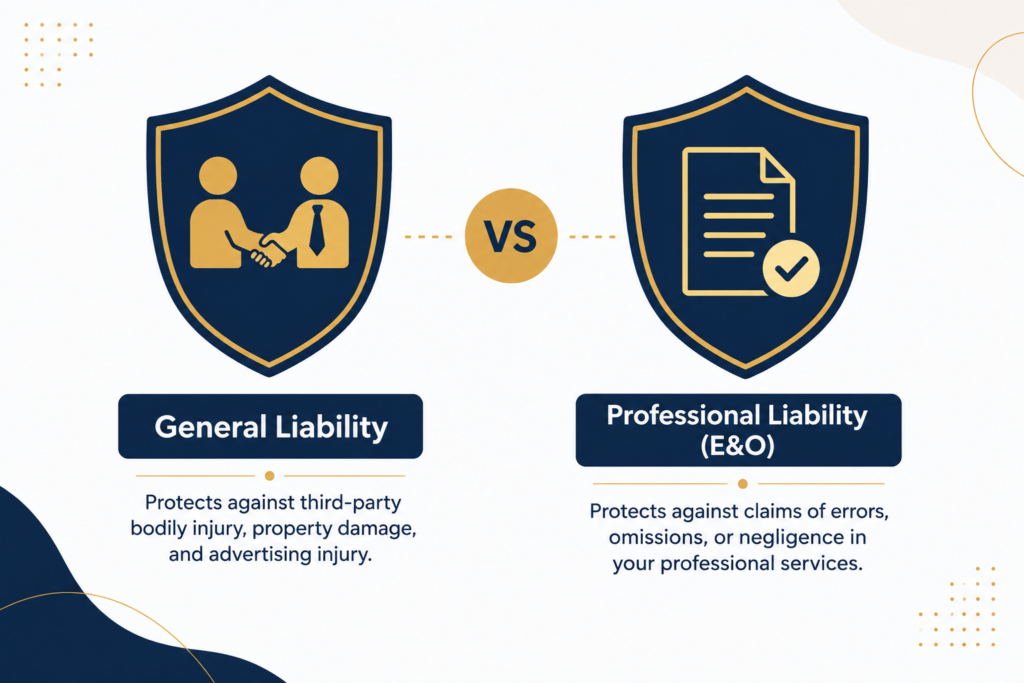
General liability insurance covers bodily injury or property damage, think a client tripping in your home office during a meeting, or accidentally damaging equipment at a client’s location. If you never meet clients in person or work entirely remote, your exposure here is lower, but many client contracts require it anyway as boilerplate language, regardless of your actual work setup.
Professional liability insurance, also called errors and omissions (E&O) insurance, covers claims that your work itself caused a client financial harm, a missed deadline that cost them money, an error in a deliverable, advice that turned out to be wrong. For service-based freelancers (consultants, designers, writers, developers, marketers), this is usually the more important policy of the two, since the actual risk in freelance work is almost always about work quality and outcomes, not physical injury.
Cyber liability insurance is increasingly relevant too, especially if you handle any client data, log into client systems, or store sensitive files. A data breach, even a small one, can trigger notification costs and legal exposure that a standard policy won’t cover.
A Business Owner’s Policy (BOP) bundles general liability with property coverage, useful if you have business equipment worth protecting (a home office setup, expensive gear), though many solo freelancers can skip this if their business assets are minimal.
What Business Insurance for Freelancers Actually Costs
Real numbers vary by provider, profession, and location, but here’s what recent data shows:
| Coverage Type | Typical Monthly Cost | Typical Annual Cost |
|---|---|---|
| General liability | $29-$45 | ~$333 median (one-person business) |
| Professional liability (E&O) | $59-$88 | $700-$1,100 |
| Cyber liability | Often bundled | $175-$400 add-on |
| Combined liability package | ~$87 | ~$1,044 |
| Workers’ comp (if you have contractors) | $32-$54 | Varies by state |
A common rule of thumb from Small Business Administration guidance suggests budgeting roughly 1-2% of your annual freelance revenue for comprehensive coverage. Riskier professions (health advice, financial consulting, anything with higher liability exposure) typically sit at the higher end of these ranges, while lower-risk creative or administrative freelance work tends to land near the bottom.
Providers Worth Comparing
I looked at a handful of freelancer-focused insurers before choosing one, since general small-business insurers don’t always price freelance work accurately:
- NEXT Insurance: Strong for solo freelancers, fully digital application and instant Certificate of Insurance, useful when a client needs proof fast.
- Hiscox: Well-regarded specifically for professional liability among consultants and creative freelancers.
- Thimble: Offers coverage by the hour, day, or project, useful if you only occasionally need proof of insurance for a specific gig rather than year-round coverage.
- TechInsurance: Competitive pricing, particularly for freelance developers and IT contractors needing E&O coverage.
- Coverdash: Data-driven pricing model, often landing near the lower end of general liability quotes for one-person businesses.
No single provider is right for everyone here either, similar to what I found comparing car insurance companies and pet insurance providers earlier. It comes down to whether you need year-round coverage, occasional project-based coverage, or a specific profession’s typical risk profile.
The Health Insurance Gap Nobody Talks About
While business liability coverage gets most of the attention, there’s a bigger gap hiding underneath it: only about 40% of gig workers have health insurance at all, compared to 82% of traditional employees. Dental coverage drops to roughly 25% versus 66%, and short-term disability coverage sits at just 5% among freelancers versus 42% of employees.
If you’re building out coverage for your freelance business, it’s worth pairing this with an actual health insurance plan too, I’ve broken down the real options, including Marketplace subsidies and coverage gaps between contracts, in my health insurance guide here on Insurance Pikr.
On-Demand Coverage for Occasional Gigs
If you’re a side-hustler rather than a full-time freelancer, year-round coverage might not make financial sense. On-demand providers like Thimble now offer coverage starting as low as $5 for a single job, hour, or short project, letting you activate a policy specifically when a client requires proof of insurance rather than paying for coverage you don’t need most of the year.
This is worth knowing if you freelance occasionally alongside a full-time job or other income sources, similar to how I’d think about no medical exam life insurance for people who need fast, flexible coverage without a long-term commitment upfront.
Common Mistakes I’d Tell Any Freelancer to Avoid
- Assuming insurance is only for “real businesses.” If you invoice clients and sign contracts, you’re exposed to the same liability risks as any small business, regardless of how small your operation is.
- Waiting for a client to demand a Certificate of Insurance before shopping around. Getting quotes ahead of time means you’re not scrambling under a 48-hour deadline like I was.
- Confusing general liability with professional liability. They cover completely different risks, and most service-based freelancers need the professional liability side more.
- Not checking if your contracts require specific coverage limits. Some client contracts specify minimum coverage amounts (like $1 million per occurrence), confirm this before assuming any policy will satisfy the requirement.
- Ignoring cyber liability if you handle client data. Even freelancers with no physical office face real exposure here if they store files or access client systems.
- Skipping health coverage while focusing only on business liability. Business insurance protects your work, but it does nothing for your own medical costs if you get sick or injured.
Where This Leaves Me Now
I got that Certificate of Insurance sent within 36 hours in the end, barely making the deadline, and kept the contract. But I switched to carrying year-round professional liability coverage afterward instead of scrambling every time a new client’s legal team asked for proof.
If you’re freelancing or running a side hustle without coverage right now, the moment a client asks for a COI is the worst possible time to start shopping. If you’re also working through other coverage decisions, I’ve written about my own experience with life insurance, home insurance, health insurance, car insurance, and pet insurance here on Insurance Pikr too.
For real-time quotes and profession-specific coverage details, NerdWallet’s freelancer business insurance guide and Insureon’s freelancer coverage breakdown are both solid places to cross-check before you buy.
I write about this kind of practical, real-world insurance stuff regularly over on Insurance Pikr, so if this helped, there’s more where it came from.