
Employer Pet Insurance: The Open Enrollment Option I Almost Skipped Past
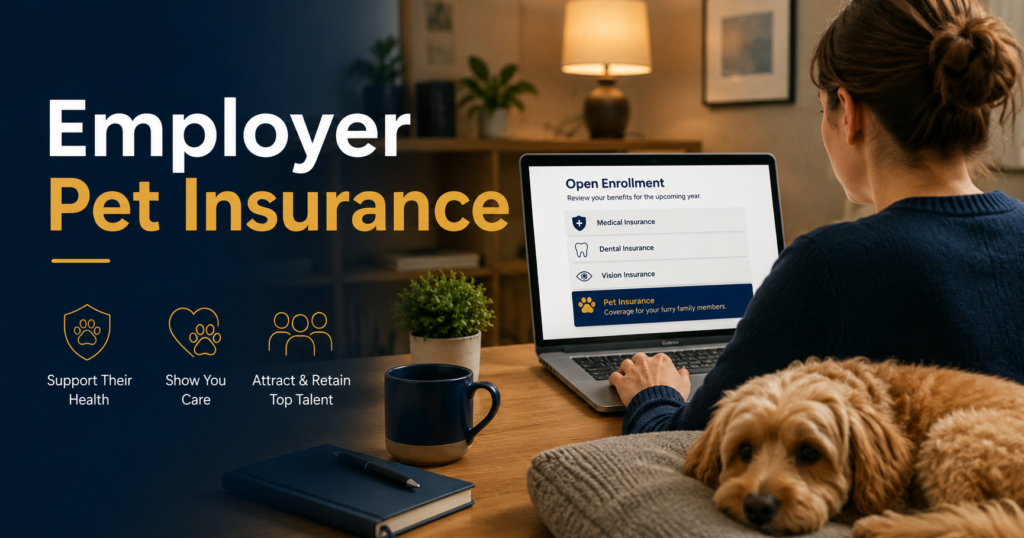
I was clicking through my company’s open enrollment portal last fall, half paying attention, when I saw a line item I’d never noticed before: pet insurance, offered as a voluntary benefit. My first instinct was to skip it entirely, I already had a pet insurance quote saved from a direct provider and assumed the employer version would just be a worse, more limited version of the same thing.
I was wrong on both counts. The group rate through my employer ended up cheaper than my individual quote for similar coverage, and the enrollment process took about ninety seconds through the same portal I was already using for health benefits. This is everything I actually learned about employer pet insurance once I stopped scrolling past it.
I’ve already covered general pet insurance strategy in my best pet insurance guide and the senior pet angle in my pet insurance for senior pets guide here on Insurance Pikr. This one is specifically about employer pet insurance, how it actually works, what it costs compared to buying direct, and why more companies are quietly adding it to their benefits packages this year.
What Employer Pet Insurance Actually Is
Employer pet insurance is a voluntary workplace benefit that lets employees enroll their pets in a group insurance plan, typically through payroll deduction, at rates negotiated by the employer with an insurance carrier. It works similarly to how employer-sponsored health or dental insurance functions, except it’s almost always 100% employee-paid rather than employer-subsidized, the value comes from the group discount and payroll convenience, not a company contribution.
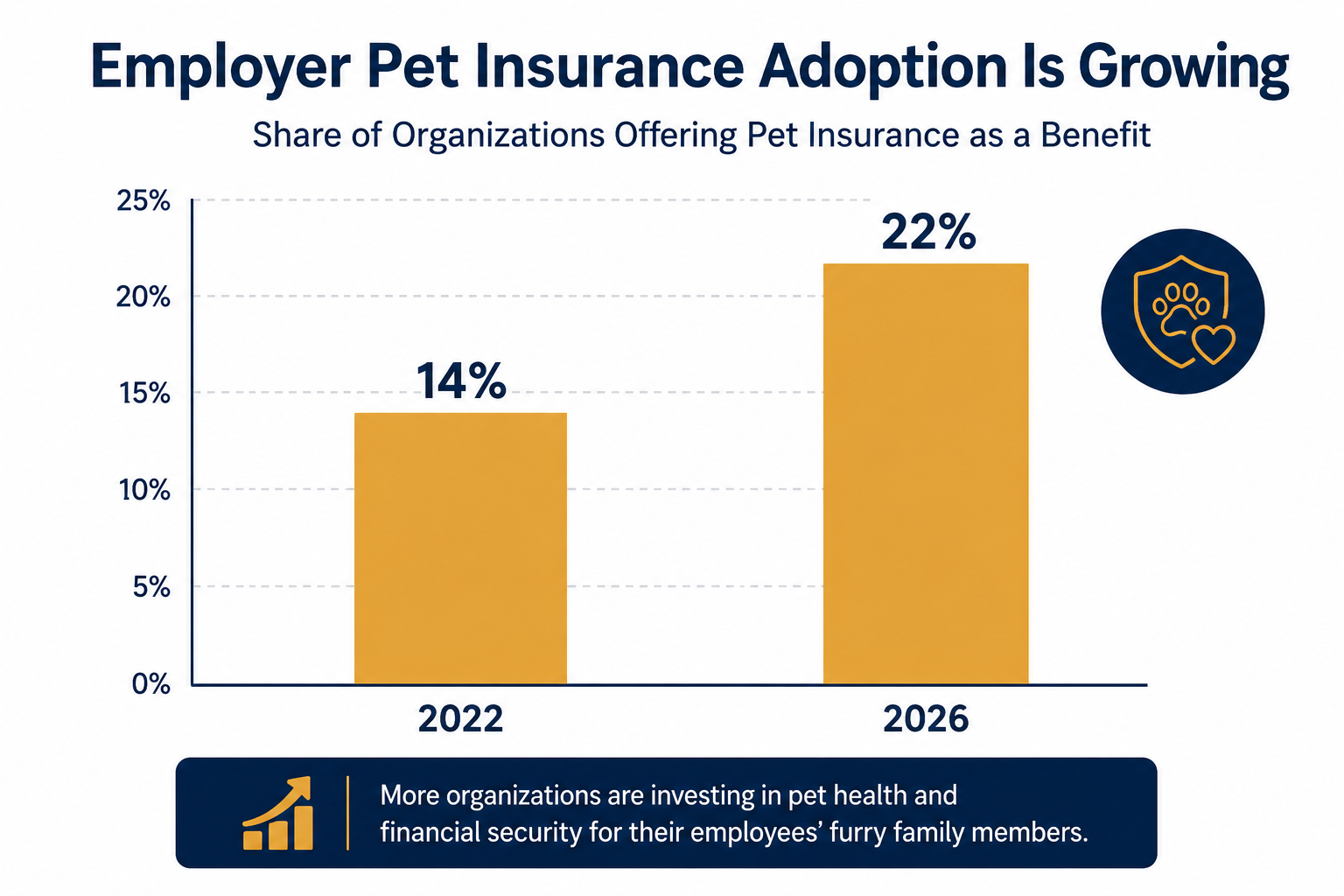
Adoption has grown fast. According to data from the Society for Human Resource Management, 22% of organizations now offer pet insurance as an employee benefit, up from just 14% in 2022, more than a 50% increase in a short window. Larger employers are significantly more likely to offer it than smaller companies, and interest is especially high among younger workers, a demographic shift that’s pushing more HR and benefits teams to add it to their voluntary offerings.
Why Employer Pet Insurance Is Growing So Fast Right Now
A few things are driving this beyond simple trend-chasing. Veterinary costs have been rising faster than general inflation for several years running, making pet-related financial stress a genuine wellness issue for employees, not just a minor perk request. Employers have also started treating pet benefits as a retention tool, HR Dive and ADP have both published research this year framing pet insurance as filling a real gap in traditional wellness offerings, since a large share of the workforce now considers pets part of the family, not just a household expense.
Retail and membership-based access is expanding the option too, Costco announced a partnership with Figo starting in 2026 to offer pet insurance to members with no age or breed restrictions, a sign that pet coverage is moving into the same everyday-access channels as more established benefits.
What Employer Pet Insurance Actually Costs
Group employer rates typically run somewhat cheaper than buying an equivalent individual policy directly, since the insurer is pricing across a larger, more predictable pool rather than underwriting each pet individually at full retail rates:
| Coverage Source | Typical Monthly Cost (Dog) | Typical Monthly Cost (Cat) | Notes |
|---|---|---|---|
| Employer group plan | $25-$55 | $15-$35 | Payroll-deducted, no employer contribution typical |
| Direct individual policy | $35-$65 | $20-$45 | Same coverage, bought independently |
| Employer wellness-only plan | $10-$20 | $8-$15 | Covers routine care, not accidents/illness |
(Rates vary by carrier, breed, age, and coverage limits. Some employer plans, like those through MetLife, include additional discounts for bundling with other employer-offered policies.)
Common Carriers Offering Employer Pet Insurance
A handful of insurers have built out dedicated employer group offerings rather than just repackaging individual plans:
- MetLife offers employer group discounts alongside affinity and organization membership discounts, plus bundling incentives with other MetLife coverage employees may already carry.
- Nationwide was one of the earliest major carriers to build employer-sponsored pet insurance programs and remains widely available through benefits platforms.
- Trupanion offers direct employer partnerships with unlimited payout options, appealing to employers wanting a higher-value benefit despite a higher premium.
- Spot provides employer benefit integration alongside its individual plans, including 24/7 pet telehealth access as a standard inclusion.
- Healthy Paws, now distributed through Combined Insurance (a Chubb company) as of mid-2025, expanded specifically into the employer voluntary benefits channel to meet rising employer demand.
Employer Pet Insurance and Taxes
Worth knowing before you enroll: unlike health insurance premiums, employer pet insurance premiums are almost always paid with post-tax payroll deductions, not pre-tax like a Section 125 health plan. The IRS doesn’t currently classify pet insurance as a qualified medical benefit, so there’s no tax advantage tied to the payroll deduction itself, the value is purely in the negotiated group rate and enrollment convenience, not a tax break.
How to Ask Your Employer About Pet Insurance
If your company doesn’t currently offer it, raising it with HR is a reasonable ask, especially given the current growth trend. Benefits teams are actively evaluating voluntary benefit additions right now, and documented employee interest is genuinely one of the inputs they weigh when deciding what to add during the next open enrollment cycle. Framing it around retention and low-cost implementation, since most employer pet insurance requires no employer financial contribution, tends to land better than framing it purely as a personal request.
Common Mistakes People Make With Employer Pet Insurance
- Assuming the employer plan is automatically worse than buying direct: Group rates are often cheaper for equivalent coverage, it’s worth comparing both before dismissing the workplace option.
- Skipping it during open enrollment and forgetting to revisit it: Many plans only allow enrollment during specific windows, missing it can mean waiting a full year for another chance.
- Assuming it’s pre-tax like health insurance: It typically isn’t, don’t factor in a tax savings that isn’t actually there when comparing costs.
- Not checking if it’s a true insurance plan or a wellness-only reimbursement benefit: Some employer offerings only cover routine care, not accidents or illness, confirm which type you’re actually enrolling in.
- Leaving a job without checking portability: Some employer pet insurance policies can convert to an individual policy if you leave the company, others cannot, worth confirming before assuming continuous coverage.
- Not comparing the specific coverage limits against a direct policy: A cheaper group premium sometimes comes with a lower annual payout cap, match the actual coverage terms, not just the price.
Where This Leaves Me Now
I ended up enrolling through my employer’s plan instead of the direct quote I’d already been sitting on, better price, same coverage tier, and one less bill to manage outside of payroll. It’s a small thing in the grand scheme of open enrollment decisions, but it’s exactly the kind of benefit that’s easy to scroll past without realizing it might actually beat what you’d find shopping on your own.
If your next open enrollment period is coming up, it’s worth actually reading that pet insurance line item instead of skipping straight to health and dental. If you’re also working through other coverage decisions, I’ve written about my own experience with life insurance, home insurance, health insurance, and business insurance here on Insurance Pikr too.
For a broader look at how this benefit is trending and what to ask before enrolling, Spot Pet Insurance’s guide to pet insurance as an employee benefit and Forbes Advisor’s best pet insurance companies ranking are both solid, current places to compare options before your next enrollment window.
I write about this kind of practical, real-world insurance stuff regularly over on Insurance Pikr, so if this helped you catch something worth a second look, there’s more where it came from.