

Non-Owner Car Insurance: Who Needs It and What It Really Covers

Maybe you sold your car after moving to the city. Maybe you use rentals for weekend trips or borrow a friend’s car now and then. Or maybe a judge or the DMV told you that you need an SR-22 to get your license back but you don’t own anything to insure.
In all of these cases the same question pops up. How do you get car insurance without a car? That’s where non-owner car insurance comes in. This guide explains what it covers and who it’s built for. It also shows the gaps that surprise people after an accident.
The quick answer
Non-owner car insurance is a liability policy for people who drive but don’t own a vehicle. It pays for injuries and damage you cause to others when you drive a borrowed or rented car. It usually doesn’t pay to fix the car you were driving. It’s often cheaper than a standard policy. It can also help you meet an SR-22 requirement and avoid a gap in your insurance history.
What non-owner insurance covers
- Bodily injury liability for people you hurt in a crash you cause
- Property damage liability for other people’s cars and property
- Uninsured or underinsured motorist coverage in many states
- Medical payments or personal injury protection in some states
What it usually doesn’t cover
- Damage to the car you’re driving
- Theft of the borrowed or rented car
- Cars you own or that live in your household
- Cars you have regular access to such as a roommate’s daily car
- Driving for work like rideshare or delivery
That first gap matters most. If you crash a friend’s car the repair bill usually goes to their own collision coverage if they have it. Your non-owner policy steps in for injuries and damage to other people.
How it works with the car owner’s policy
Here’s something many people don’t know. In most cases insurance follows the car. So when you borrow a car the owner’s policy is usually the primary coverage. Primary means it pays first.
Your non-owner policy is usually secondary. It kicks in after the owner’s liability limits run out. That extra layer can protect you in a serious crash where the owner carries only low limits.
Who non-owner car insurance is for
People who borrow cars often. If you regularly borrow from friends or family a non-owner policy adds protection beyond their limits.
Frequent renters. A non-owner policy can provide liability coverage so you may skip the rental counter’s liability add-on. It won’t replace the damage waiver for the rental car itself unless you have another source such as a credit card benefit. Check what your card covers.
People who need an SR-22. An SR-22 is a form your insurer files with the state to prove you carry the required liability coverage. Courts or the DMV may require it after a DUI or driving without insurance or other serious violations. Florida and Virginia also use a form called FR-44 with higher limits. A non-owner policy can let you file without owning a car.
People between cars. Selling one car and buying another next year? A non-owner policy can keep your insurance history continuous. A gap in coverage often leads to higher prices later.
Who it’s not for
If a car is parked at your home and you can drive it whenever you want, a non-owner policy usually isn’t the right tool. Insurers want you listed on that car’s policy instead. The same goes for a car registered in your name even if someone else drives it most of the time.
And if you drive for Uber or Lyft or a delivery app you need different coverage. Our guide on rideshare insurance for Uber and Lyft drivers explains those rules.
What it costs
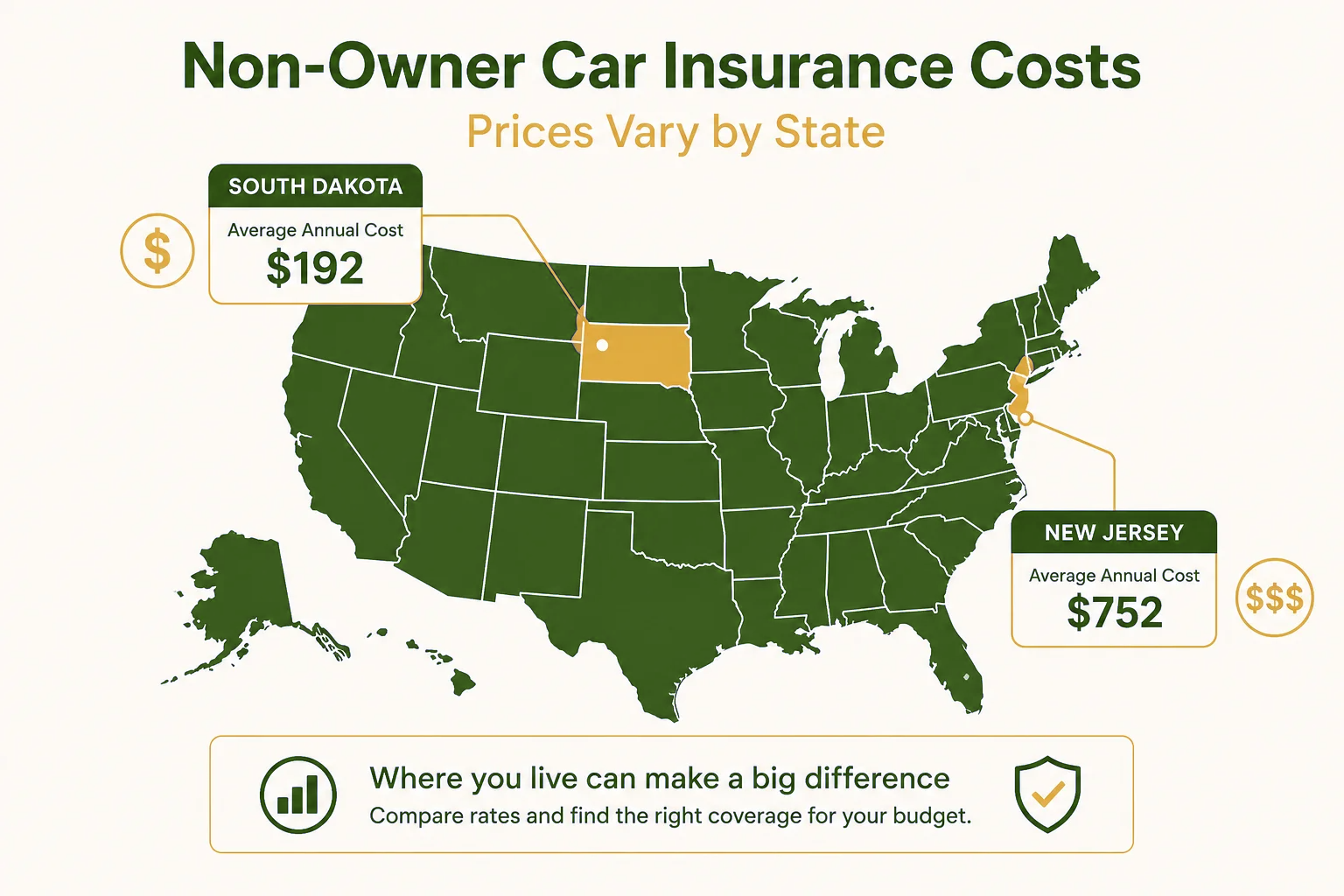
Non-owner policies are often cheaper than a standard policy because they cover less. There’s no collision or comprehensive and you’re not insuring a specific car. Your price still depends on your state and age and driving record. An SR-22 requirement usually raises the price because it signals higher risk.
The best way to know is to get a few quotes. Not every insurer sells non-owner policies online. You may need to call or work with an agent.
How to buy a non-owner policy step by step
Step 1: Check your state’s minimum liability limits. If you need an SR-22 or FR-44, confirm the exact limits required.
Step 2: Call several insurers and ask if they offer non-owner coverage in your state. Some large companies do and some don’t.
Step 3: Ask for limits above the state minimum if you can afford it. Minimum limits can be used up fast in a serious crash.
Step 4: If you need an SR-22, ask the insurer to file it with the state and to send you a copy.
Step 5: Keep proof of insurance in your phone or wallet whenever you drive.
Step 6: Pay on time. If an SR-22 policy lapses the insurer may notify the state and your license could be suspended again.
A hypothetical example
Picture a young professional who sold his car after moving downtown. He rents a car a few times a year and borrows his sister’s SUV now and then. He buys a non-owner policy with solid liability limits. One afternoon he rear-ends another driver in his sister’s SUV. Her policy pays first for the other driver’s damage. Because the injuries turn out to be costly her limits run out. His non-owner policy helps pay the rest.
Her own collision coverage handles the repair to her SUV after her deductible. This is only an illustration but it shows how the layers stack.
Non-owner insurance vs the rental counter
Standing at a rental counter after a long flight is not the best time to make insurance decisions. The agent lists options fast. You feel pressure to say yes to everything.
Here’s a simpler way to think about it. Rental companies usually offer two main things. One is liability protection for damage you cause to others. The other is a damage waiver that covers the rental car itself. A non-owner policy can handle the first part. It doesn’t handle the second.
So before your trip, check your credit card benefits for rental car damage coverage. Then you’ll know which counter options you can skip and which you may still want. It takes five minutes and can save real money.
Questions to ask before you buy
- Does this policy cover rental cars and borrowed cars in every state
- Is uninsured motorist coverage included
- Will you file my SR-22 and is there a fee
- What happens if I buy a car while this policy is active
- Can I pay monthly without a lapse risk
Common mistakes with non-owner car insurance
- Thinking non-owner insurance pays to fix the borrowed car
- Buying it while you have regular access to a household car
- Choosing the lowest legal limits without thinking about a serious crash
- Letting an SR-22 policy lapse
- Assuming it covers rideshare or delivery work
- Forgetting to switch to a standard policy when you buy a car
Frequently asked questions
Do I need non-owner insurance to rent a car?
No. Rental companies offer their own coverage and some credit cards include benefits. A non-owner policy is one way to get liability protection you control.
Can I get non-owner insurance with a suspended license?
Often you can buy it as part of getting your license reinstated with an SR-22. Rules vary by state so ask your DMV.
Does non-owner insurance cover other drivers?
No. It covers you as the named driver when you drive cars you don’t own.
A calm way to finish
Not owning a car doesn’t mean you’re done with car insurance. If you drive at all you carry risk. A non-owner policy is a simple affordable way to protect yourself and keep your record clean. Know what it covers. Know what it doesn’t. And keep your limits strong.
When you’re ready to buy a car again our guide to the best car insurance in 2026 walks you through choosing a full policy. You can also find your state’s insurance regulator through the NAIC if you have questions about SR-22 rules.
Disclaimer: This article is general information and not legal or insurance advice. Coverage and SR-22 rules vary by state and by insurer. Check with your state DMV or a licensed agent before you buy.