

Employer Pet Insurance: Is Your Workplace Benefit Worth It
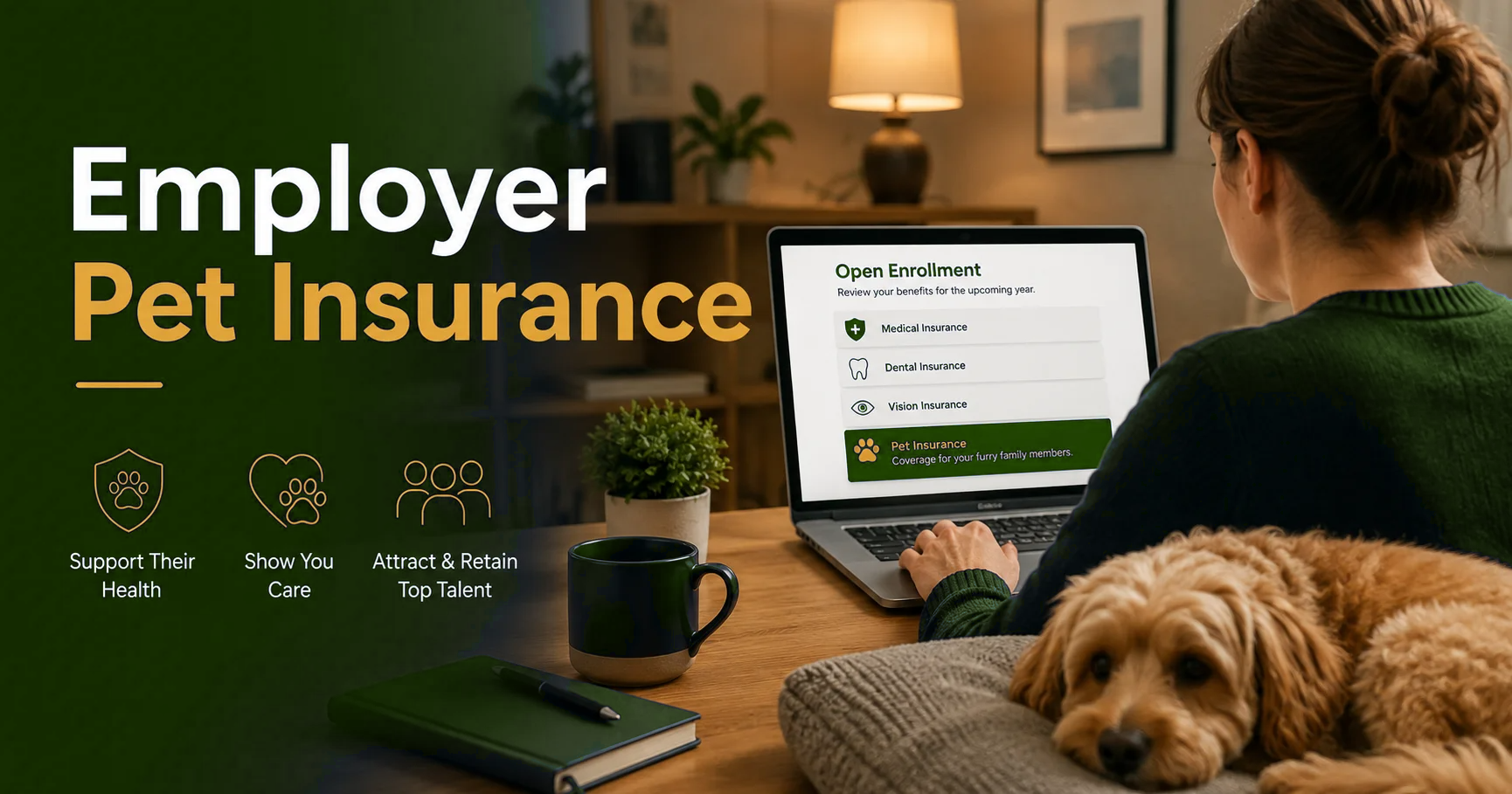
Open enrollment season brings a long list of choices. Health and dental and vision. Then somewhere near the bottom there’s pet insurance. It’s one of the newer voluntary benefits and more employers are adding it.
So is it a good deal or just another form to fill out? Let’s look at how workplace pet insurance works and how to judge it.
What employer pet insurance usually is
In most cases the employer doesn’t pay for it. It’s a voluntary benefit. You choose to enroll and the premium comes out of your paycheck. The employer arranges the offering through an insurer or a benefits platform. The benefit to you is convenience and sometimes group pricing.
Because it’s still an insurance policy for your pet the key terms look familiar. There’s a deductible and a reimbursement rate and an annual limit. There are waiting periods and exclusions for pre-existing conditions.
What you might gain
- Payroll deduction so the cost is spread out
- A simple sign-up during open enrollment
- Possible group pricing or a special enrollment offer
- A chance to add pet coverage without searching on your own
- Sometimes added perks like telehealth access
These can make the benefit attractive. They don’t guarantee it’s the best deal.
What to check before you enroll
Who is the insurer? The company behind the plan matters. Look up its complaint record and financial standing. The National Association of Insurance Commissioners is a good place to start for complaint information.
What is covered? Compare the plan to an individual policy. Does it cover accidents and illnesses and hereditary conditions. Does it have dental or behavioral coverage or wellness options.
What are the limits? Look at the annual limit and the reimbursement percentage and the deductible. A plan with a low annual limit might not help much in a serious emergency.
What are the waiting periods? Group plans have waits like individual ones. Our guide on pet insurance waiting periods explained explains each type.
Does it follow you? Ask what happens if you leave your job. Some plans are portable and some end. A policy tied to employment could leave your pet without coverage right when your life is in flux.
Compare it to an individual policy
Never accept the workplace option without a comparison. Get at least two quotes for the same pet with the same deductible and reimbursement. Check whether the group price is actually lower. Sometimes it is and sometimes a direct policy is cheaper or more flexible.
Our guide to the best pet insurance policy in the USA 2026 shows how to compare providers. Use the same checklist for the workplace plan.
Step by step evaluation
Step 1: Get the plan documents and read the summary page.
Step 2: Write down the deductible and reimbursement and annual limit.
Step 3: Note the waiting periods and the pre-existing condition rules.
Step 4: Get an individual quote for the same settings.
Step 5: Compare monthly cost and coverage details side by side.
Step 6: Ask your human resources team about portability and the enrollment window.
How payroll deduction changes the picture
Paying through payroll can feel painless. A small amount leaves each paycheck and you hardly notice. That convenience is real but it can hide the full cost. Multiply the per-paycheck amount by the number of pay periods in a year so you see the annual total. Then compare that number with individual quotes.
Also check whether the deduction is taken before or after taxes. Most pet insurance premiums are paid with after-tax money. Ask your payroll team if anything is different at your company.
What a plan might not cover
Every plan has gaps. Read the exclusions list before you enroll. Common exclusions include pre-existing conditions and cosmetic procedures and some preventive care. Some plans exclude or limit hereditary or breed-specific conditions. Others limit coverage for dental illness or behavioral issues.
If your pet belongs to a breed prone to certain problems then ask directly about those conditions. A plan that looks good on the first page might exclude exactly what you worry about.
Claims and reimbursement
Find out how claims work. Most plans reimburse you after you pay the vet. A few can pay the clinic directly. Ask how long claims typically take and how to submit them. Check whether the plan has a cap on the number of claims or the dollars paid per condition.
Keep every invoice and the medical record that goes with it. Submit claims promptly and track the status. Clear records make a big difference if there’s ever a question.
When to skip the workplace plan
- You find a better individual policy with stronger coverage
- The plan has low annual limits that wouldn’t cover a serious emergency
- The coverage ends when you change jobs and you can’t take it with you
- The waiting periods are longer than other options
- The insurer has a weak complaint record
There’s no shame in passing. Plenty of people use an individual policy and keep it for the life of their pet.
Enrollment windows matter
Many workplace benefits can only be chosen during open enrollment or after a qualifying event. If you miss the window you may wait a year. Some pet plans allow enrollment all year. Ask which applies. Don’t assume you can sign up later.
If your pet is young and healthy then enrolling sooner is usually better. Waiting until a health problem shows up can lead to exclusions. We cover that in the senior pets guide below.
Older pets and workplace plans
Older pets can be harder to insure and some plans have age limits. If you have a senior animal check the plan’s rules carefully. Our guide on pet insurance for senior pets explains what to ask when age is a factor.
Multiple pets and extra savings
If you have more than one pet then ask whether the workplace plan offers a multi-pet discount. Compare it with what you could get elsewhere. We walk through that in multi-pet insurance discounts.
Some workplace plans may also mention connected devices or wellness perks. Be cautious about promised savings. See pet wearables and insurance discounts for why.
A hypothetical example
Picture an employee who sees pet insurance in the benefits list and signs up quickly. A few months later their dog needs treatment for a condition that started during a waiting period. The plan excludes it as pre-existing. Had they read the terms they would have known to enroll earlier or ask about a vet exam waiver.
Now picture a coworker who compares the workplace plan with an individual quote. They find the group plan costs a bit less with similar coverage and they choose it knowing exactly what it includes. This is only an illustration but it shows why reading the terms pays off.
Questions to ask your human resources team
- Is the plan voluntary and who pays the premium
- Which insurer underwrites the plan
- Can I take the policy with me if I leave
- How long is the open enrollment window
- Are there waiting periods or age limits
- Can I add more than one pet
Mistakes to avoid
- Assuming the employer pays for the plan
- Enrolling without comparing an individual quote
- Ignoring portability
- Missing the enrollment window
- Not reading pre-existing condition rules
- Choosing the cheapest option without checking annual limits
Helpful resources
It’s easy to feel rushed during open enrollment so give yourself a quiet hour to read the plan documents and ask your questions.
The American Veterinary Medical Association has neutral guidance on pet health insurance. For information about employee benefits in general the Society for Human Resource Management publishes explainers.
Employer pet insurance: the bottom line
Whatever you choose make sure you understand what you’re signing up for before open enrollment closes.
A workplace pet benefit can be a convenient way to add coverage. It isn’t automatically the best choice. Compare it with individual policies and check the insurer and the terms. Then decide with the numbers in front of you.
Disclaimer: This article is for general information only. It is not veterinary or financial or insurance advice. Plans and rules vary by employer and by state. Please talk to a licensed insurance professional before you make a decision.