
Does Health Insurance Cover Weight Loss Drugs? What I Found Out After a $1,300 Pharmacy Bill

My doctor prescribed Wegovy, I filled it without a second thought, and the pharmacy counter number stopped me cold: $1,349 for a single month’s supply. I genuinely assumed my insurance, a fairly standard employer plan, would cover at least part of it. It covered none of it, and the reason why took me weeks of phone calls to actually understand.
If you’ve had a similar moment, or you’re trying to figure out the answer before you’re standing at the pharmacy counter, this is everything I learned working through does health insurance cover weight loss drugs, carrier by carrier, plan type by plan type, and what actually changed the outcome for me.
I’ve already covered general health insurance strategy in my best health insurance in USA guide and the self-employed angle in my health insurance for self-employed guide here on Insurance Pikr. This one is specifically about GLP-1 weight loss medication coverage, since it’s become one of the most common, and most confusing, insurance questions of 2026.
The Short Answer to Does Health Insurance Cover Weight Loss Drugs
For most people on a standard commercial plan, the default answer is no. The exclusion language used by nearly every major insurer, UnitedHealthcare, Aetna, Cigna, Anthem, and Humana, is functionally identical: prescription drugs for the treatment of obesity, weight loss, weight reduction, or appetite suppression are not covered, regardless of other health conditions. This isn’t one company being stingy, it’s an industry-wide default position built into standard plan documents.
Only about 12-18% of employers currently purchase an optional obesity coverage rider that moves these drugs from the exclusion list onto the actual formulary, according to 2026 plan analysis. If your employer hasn’t bought that rider, the drug is excluded no matter how medically appropriate your doctor considers it.
Why the Same Drug Gets Covered for One Reason but Not Another
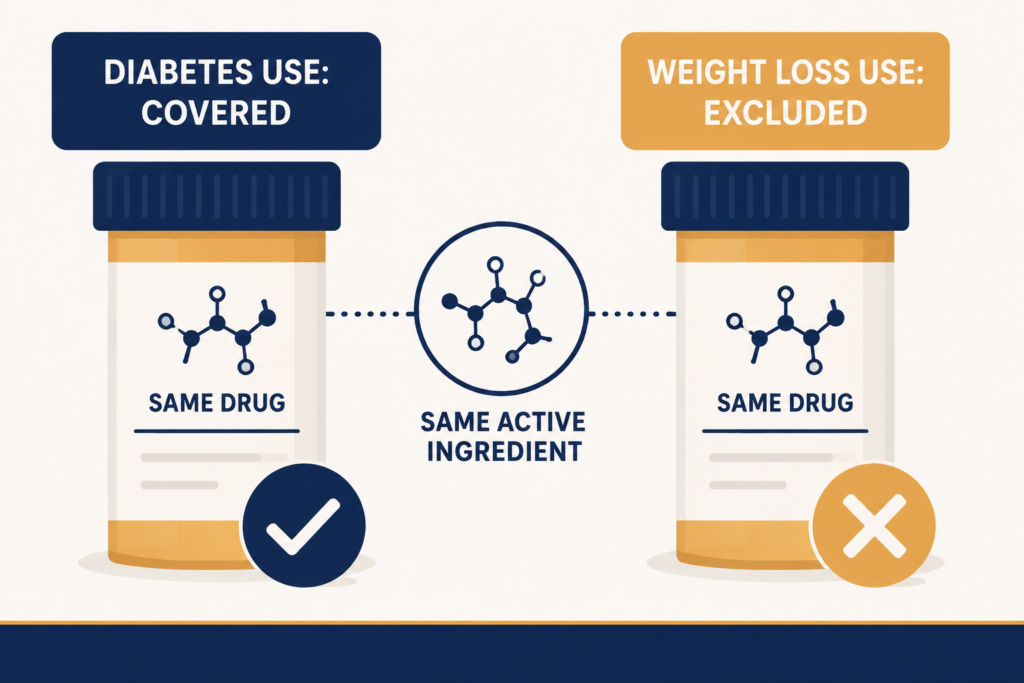
This is the part that confused me most, and it explains almost every denial story you’ll hear. Insurance coverage is based on FDA-approved indication, not the drug itself. Ozempic (semaglutide) is FDA-approved specifically for type 2 diabetes, not obesity, so it’s routinely covered when prescribed for diabetes, but excluded when prescribed off-label purely for weight loss. Wegovy, a higher-dose version of the same active ingredient, is FDA-approved specifically for chronic weight management, so it falls under the obesity exclusion by default unless your employer has purchased that additional rider.
Does Health Insurance Cover Weight Loss Drugs by Major Carrier
| Carrier | Ozempic (Diabetes) | Wegovy/Zepbound (Weight Loss) | Typical Requirement |
|---|---|---|---|
| UnitedHealthcare | Covered with prior authorization | Excluded by default; covered only with employer-purchased rider | BMI ≥30, or ≥27 with comorbidity |
| Cigna | Covered in ~94% of commercial plans | Excluded in ~98% of policies | Documented A1C above 7.0%, metformin trial |
| Aetna | Covered in most commercial and Medicare Advantage plans | Excluded unless obesity rider purchased (12-18% of employers) | 6-month documented weight loss attempt |
| Anthem | Covered with prior authorization | Excluded by default, same industry-standard language | Step therapy often required |
| Medicare Part D | Covered for diabetes | Covered specifically for cardiovascular risk reduction, not pure weight loss | Diagnosed cardiovascular risk factor required |
| Medicare Advantage | Covered for diabetes | Weight-loss-specific GLP-1 coverage begins July 2026 under new CMS rule | Still developing, check plan specifics |
| Medicaid | Varies significantly by state | Varies significantly by state | Check your specific state’s formulary |
(Coverage details change frequently as plans update their formularies. Always confirm directly with your specific plan, since “UnitedHealthcare” or “Cigna” as a brand doesn’t guarantee identical coverage, self-funded employer plans under the same carrier can differ enormously.)
What “Does My Plan” and UMR Coverage Actually Means
If your insurance card says UMR, this is a detail worth understanding directly: UMR is UnitedHealthcare’s third-party administrator for self-funded employer health plans. UMR itself doesn’t decide whether weight loss drugs are covered, your specific employer does, since self-funded plans set their own formulary rules rather than following a standard UnitedHealthcare policy. This is exactly why two coworkers at different companies, both technically “on UnitedHealthcare,” can have completely different weight loss drug coverage.
The most reliable way to answer “does my plan cover this” isn’t searching your carrier’s name online, it’s logging into your specific member portal, searching the exact drug name in your formulary, or calling the member services number on the back of your card and asking directly: “Is [medication name] on my plan’s formulary, and what’s my cost-share after prior authorization?”
Federal Employee and Government Plan Coverage
For federal employees enrolled in FEHB (Federal Employees Health Benefits) plans, coverage varies by the specific plan you’ve chosen during open enrollment, there’s no single “federal” answer, since FEHB includes dozens of competing plan options, each setting its own formulary. Some FEHB plans have added GLP-1 weight loss coverage in recent years, while others maintain the standard obesity exclusion. Checking your specific FEHB plan’s formulary directly through OPM’s plan comparison tool is the only reliable way to confirm your actual coverage.
What Changed With Medicare in 2026
This is genuinely new and worth knowing. Medicare Part D began covering Wegovy specifically for patients with an established cardiovascular risk factor, not for weight loss alone, following an expanded FDA indication. Under a new CMS rule, Medicare Advantage plans are extending GLP-1 weight-loss-specific coverage starting July 2026, a meaningful shift from Medicare’s historic blanket exclusion of weight loss medications. If you’re on Medicare and were previously told these drugs aren’t covered at all, it’s worth checking again, the rules are actively changing this year.
What to Actually Do If You’re Denied
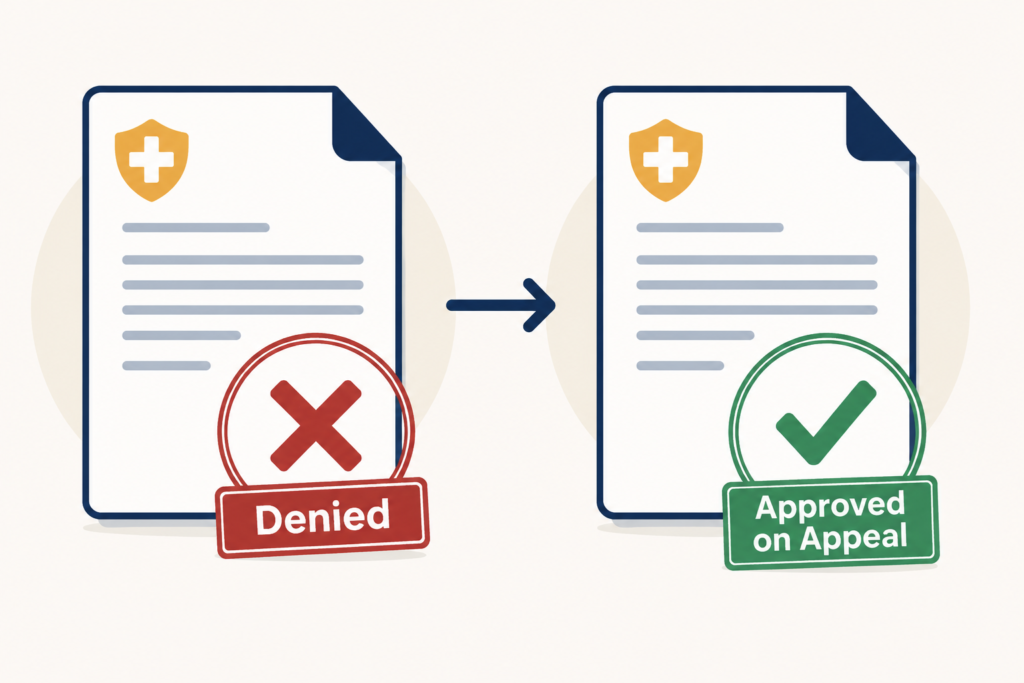
A denial isn’t always final. Ask your prescriber’s office to submit a formal appeal with documentation of BMI, comorbidities, and any prior weight management attempts, insurers often reverse initial denials when the clinical documentation is thorough. If your plan categorically excludes the drug class regardless of medical necessity, an appeal won’t help, and it’s worth asking your employer’s HR or benefits team directly whether an obesity coverage rider could be added at the next renewal, employee demand is genuinely one of the factors benefits teams weigh when deciding what to add.
Manufacturer savings programs are also worth checking regardless of your insurance situation. Novo Nordisk and Eli Lilly both offer savings cards that can reduce out-of-pocket costs for commercially insured patients, even when the drug itself isn’t covered, though these typically don’t apply if you’re on Medicare or Medicaid.
Common Mistakes People Make Asking Does Health Insurance Cover Weight Loss Drugs
- Assuming your carrier’s name guarantees a specific answer. Self-funded employer plans under the same carrier brand can have completely different coverage rules, always check your specific plan.
- Not realizing Ozempic and Wegovy are treated differently despite the same active ingredient. Coverage follows FDA-approved indication, diabetes versus weight loss, not the drug’s chemical composition.
- Giving up after one denial without appealing. Denials tied to insufficient documentation are often reversible; categorical exclusions typically aren’t, know which situation you’re actually in.
- Assuming Medicare never covers these drugs. The rules changed meaningfully in 2026, particularly for cardiovascular risk indications and the new Medicare Advantage rule taking effect in July.
- Not asking your employer about an obesity coverage rider. Only 12-18% of employers currently purchase this, but it’s a legitimate benefits request, not an unusual one, given how common these prescriptions have become.
- Skipping manufacturer savings programs. These can meaningfully reduce out-of-pocket costs even when your insurance formulary excludes the drug entirely.
Where This Leaves Me Now
I ended up switching to a documented diabetes-adjacent prescription pathway with my doctor after that first $1,349 bill, which changed my coverage outcome entirely, along with pushing my employer to consider the obesity rider at the next renewal. The gap between what I assumed my insurance covered and what it actually excluded turned into a genuinely useful crash course in how formularies actually work.
If you’re facing a similar pharmacy counter surprise, checking your specific plan’s formulary directly, rather than assuming based on your carrier’s name, is the one step that would have saved me weeks of confusion. If you’re also working through other coverage decisions, I’ve written about life insurance, home insurance, car insurance, and pet insurance here on Insurance Pikr too.
For official Medicare and Medicaid GLP-1 coverage updates, CMS.gov is the authoritative source, and KFF’s ongoing GLP-1 coverage tracker is a solid, unbiased resource for tracking how coverage continues to shift state by state and plan by plan.
I write about this kind of practical, real-world insurance stuff regularly over on Insurance Pikr, so if this helped clear up your own coverage question, there’s more where it came from.