
What Happened When I Actually Synced My Apple Watch to My Policy
My agent mentioned almost in passing that my policy came with a wellness program, sync a fitness tracker, earn points, points knock money off my premium. I nodded along politely and forgot about it for six months, assuming it was one of those “perks” nobody actually uses. Then I got laid off, tightened my budget, and remembered that forgotten program while looking for literally anything to cut costs.
Turns out it wasn’t a gimmick. Once I actually engaged with it, walking more, logging annual checkups, syncing my watch consistently, my premium tier moved, and the discount was real money, not a marketing footnote. Here’s everything I learned once I stopped ignoring life insurance discounts for healthy habits and actually used mine.
I’ve already covered general life insurance basics in my life insurance guide, the fast-approval route in my no medical exam life insurance guide, and the workplace angle in my group vs individual life insurance guide here on Insurance Pikr. This one is specifically about life insurance discounts for healthy habits, how they actually work in 2026, and whether they’re worth the effort.
How Life Insurance Discounts for Healthy Habits Actually Work
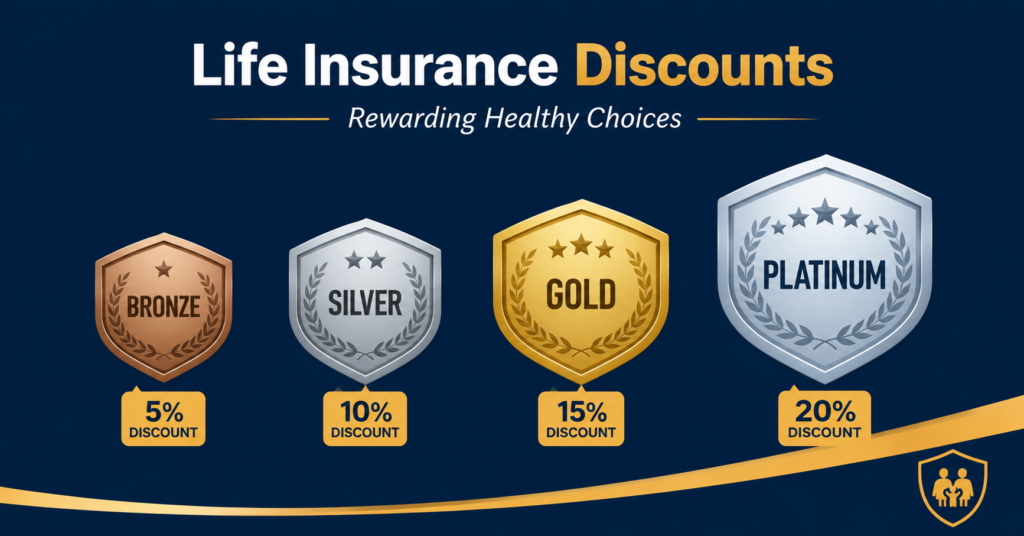
The most established program in this space is John Hancock’s Vitality program, built around a genuinely simple mechanic: you earn points for healthy behaviors, going to the gym, buying healthy groceries, tracking sleep, completing preventive screenings and annual checkups, and syncing a wearable device. Those points move you through tiers, bronze, silver, gold, platinum, similar to how airline frequent flyer programs work, and each tier unlocks real premium reductions along with tangible perks.
According to recent testimony before Congress, Vitality members walk roughly twice as many daily steps as the average American, and about half of members who started with high blood pressure brought it into a healthy range within a single year of active participation. That’s not just a marketing claim, it’s the actual behavioral data the program’s own leadership has presented to lawmakers.
What You Actually Get From Life Insurance Discounts for Healthy Habits
Beyond the premium tier reductions themselves, these programs typically include real, immediate rewards: discounted or complimentary wearable devices (Apple Watch, Fitbit, Garmin, or Polar trackers), gift cards to retailers like Amazon or Starbucks, discounts on healthy groceries and gym memberships, and in some cases, access to advanced screening tests like early cancer detection blood panels for members over 40. For eligible policyholders under $2 million in coverage specifically, John Hancock’s program includes options like ordering an Apple Watch Series 3 for as little as $25, or choosing a complimentary Fitbit instead.
Life Insurance Discounts for Healthy Habits by Program Type
| Program Feature | Standard Vitality Tier | Aspire (Diabetes-Specific) Program |
|---|---|---|
| Who it’s for | General policyholders tracking fitness and wellness activities | Type 1 and Type 2 diabetics specifically |
| Premium discount potential | Tiered reductions based on points earned (bronze to platinum) | Up to 25% |
| Included tools | Wearable syncing, gym/grocery discounts, screening access | Diabetes management app, health coaching |
| Device incentives | Apple Watch, Fitbit, Garmin, or Polar tracker options | Included as part of broader wellness tracking |
| Best fit | Policyholders who will actually use the program consistently | Diabetics who want proactive, disease-specific support |
(Specific discount percentages and tier structures vary by policy face amount and state. Programs work best for people who genuinely engage with the tracking, not those who sign up and never open the app.)
Is This Worth It, or Just a Marketing Gimmick?
This is the honest question worth asking before assuming either way. According to a detailed 2026 review of the program, it makes the most sense specifically for people who will actually use the wellness features rather than just enroll and forget, exactly the mistake I made for the first six months of my own policy. If you already track fitness, attend regular checkups, and want those existing habits to lower your premium, the math genuinely works in your favor over the life of the policy. If you’re unlikely to sync a device consistently or complete the required screenings, the discount potential simply won’t materialize, regardless of how good the program sounds on paper.
Are Other Life Insurance Companies Doing This Too?
John Hancock’s Vitality program remains the most established and widely documented version of this model in the U.S. market, but the underlying idea, tying premiums or rewards to verified healthy behavior, is spreading across the broader insurance industry, not staying confined to a single carrier. Industry analysts tracking 2026 trends specifically point to wearable-linked pricing expanding beyond life insurance into auto, home, and even pet insurance, as insurers increasingly look for ways to price risk based on real, ongoing behavior data rather than a one-time medical exam alone.
For shoppers, this means it’s worth asking any life insurer you’re comparing quotes from directly whether they offer a wellness or wearable-linked program, even if it isn’t advertised as prominently as John Hancock’s. The space is genuinely evolving, and a program that didn’t exist a few years ago at a given carrier might be available now, or might launch within the life of a policy you’re about to buy.
The Science Behind Why Insurers Actually Offer This
It’s worth understanding why insurers bother building these programs at all, since it explains why the discounts are real rather than just a retention gimmick. Research presented to Congress in 2025 on modernizing American health care specifically highlighted how financial incentives tied to verified healthy behavior can meaningfully shift outcomes like blood pressure and daily activity levels at scale. For an insurer, a policyholder who’s measurably healthier represents lower long-term mortality risk, which is precisely why they’re willing to share part of that savings back with you in the form of a lower premium rather than keeping the entire benefit for themselves.
Common Mistakes People Make With Life Insurance Discounts for Healthy Habits
- Signing up and never engaging with the program. The discount isn’t automatic, it requires actually syncing your device and completing qualifying activities consistently.
- Assuming this only applies to fitness. Programs like Vitality also reward preventive screenings, healthy grocery purchases, and sleep tracking, not just gym visits.
- Overlooking condition-specific programs. If you manage diabetes, a program like Aspire can offer a meaningfully larger discount (up to 25%) than the standard wellness tier alone.
- Assuming device setup is effortless for everyone. Less tech-comfortable users may find initial wearable syncing more involved than expected, having a family member help with setup can smooth this out considerably.
- Not checking if the discount tier is based on your specific policy’s face amount. Reward structures, including device eligibility, can differ depending on how much coverage you actually hold.
- Dismissing it as a gimmick without reading the actual mechanics. The behavioral data behind these programs, including real reported improvements in blood pressure and activity levels among members, suggests genuine engagement produces genuine results, not just marketing spin.
Where This Leaves Me Now
That forgotten wellness program ended up being one of the more useful parts of my policy once I actually paid attention to it, moving from a tier I didn’t know existed to genuinely lower monthly costs, plus a fitness tracker I use daily anyway. It’s easy to write these programs off as a sales gimmick, and I nearly did, but the mechanics behind life insurance discounts for healthy habits are more substantial than the marketing pitch initially suggests.
If your own policy includes a wellness program you’ve been ignoring, it’s worth the twenty minutes it takes to actually open the app and see what tier you’re sitting at right now. If you’re also working through other coverage decisions, I’ve written about home insurance, health insurance, car insurance, and pet insurance here on Insurance Pikr too.
For a deeper look at how these programs actually perform and what current policyholders say, NPR’s coverage of the Vitality wellness program and a detailed 2026 John Hancock policy review are both solid, current places to check details before deciding if this fits your own habits.
I write about this kind of practical, real-world insurance stuff regularly over on Insurance Pikr, so if this helped you take a second look at a benefit you’d been ignoring, there’s more where it came from.