
Bundling Home and Auto Insurance: The Gap Between the Advertised Discount and What I Actually Paid
I switched both my home and auto policies to one company purely because the ad promised “up to 25% off” for bundling. When my actual bill came, the real discount was nowhere close to that number, more like a quarter of what the advertisement implied. I felt genuinely misled until I dug into why, and it turned out the gap between “up to” and “average” is exactly the detail most people never check before switching.
That gap is exactly what I want to walk through here, what bundling home and auto insurance actually saves in 2026, which companies’ advertised numbers hold up versus which ones don’t, and how to tell the difference before you commit to switching providers.
I’ve already covered general home insurance strategy in my best home insurance policy guide and general auto insurance strategy in my best car insurance guide here on Insurance Pikr. This one is specifically about bundling home and auto insurance, since the real savings differ a lot more by company than the marketing suggests.
What Bundling Home and Auto Insurance Actually Means
Bundling home and auto insurance simply means buying both policies from the same insurance company instead of two separate providers. Insurers offer a discount for this because it reduces their acquisition costs and tends to improve customer retention, a policyholder managing two policies with one company is statistically less likely to shop around and leave. Beyond the discount itself, bundling also means one login, one renewal date structure to track, and often one point of contact if you need to file a claim involving both policies at once, like storm damage to your home and a vehicle parked in the driveway.
Advertised Discount vs. Real Average Savings
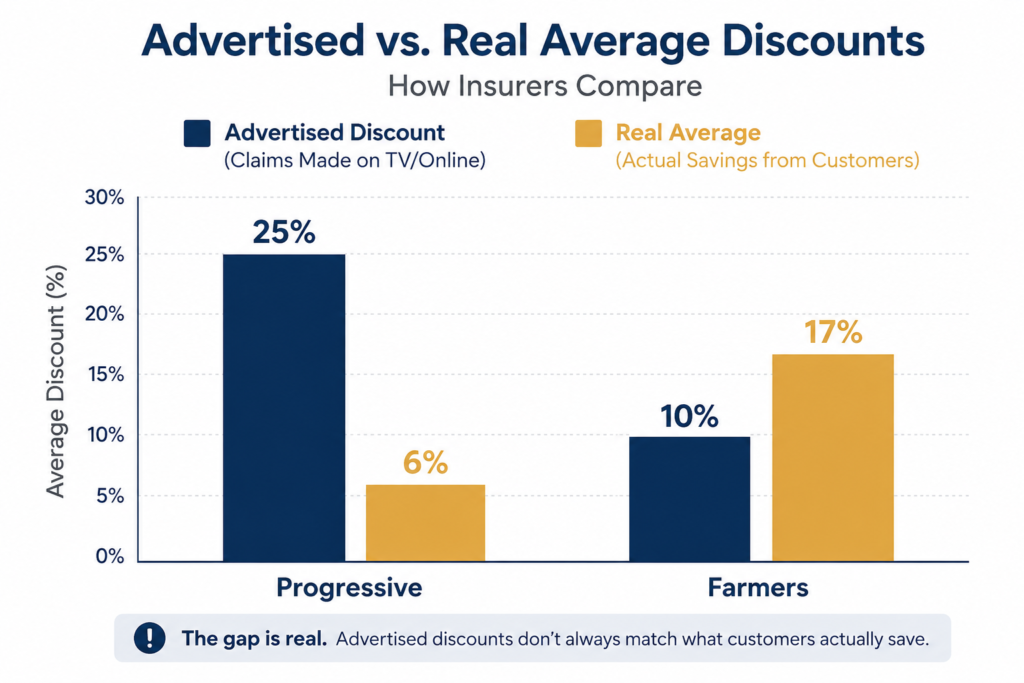
This is the exact gap that caught me off guard, and it’s worth understanding before you switch anywhere. According to a detailed 2026 rate analysis, State Farm’s advertised “up to 25%” bundling discount actually matches its real-world average fairly closely. Progressive’s advertised “up to 25%” figure, by contrast, averages closer to 6% in real customer data. Farmers is the reverse story, its advertised “up to 10%” undersells what customers typically see, averaging closer to 17% in practice. The lesson: advertised maximums and real averages are genuinely different numbers, and trusting the data over the marketing copy matters more than picking whichever company shouts the biggest percentage.
Bundling Home and Auto Insurance by Company
| Company | Advertised Bundle Discount | Real-World Average | Notable Detail |
|---|---|---|---|
| Liberty Mutual | Up to 25% | ~$950/year average savings | Largest average dollar savings; also offers a standalone homeowner discount |
| State Farm | Up to 25% | Matches advertised closely; up to $1,429/year advertised savings | Also offers up to 20% for insuring 2+ vehicles, stackable with the bundle discount |
| Allstate | Up to 25% | Among the highest real discounts | Strong option alongside Liberty Mutual and American Family |
| GEICO | Bundle discount available | Home coverage arranged through partners (Liberty Mutual, Homesite) | GEICO doesn’t underwrite home insurance directly |
| USAA | Up to 10% | Consistent with advertised figure | Military, veterans, and their families only; A++ A.M. Best rating |
| Progressive | Up to 25% advertised | ~6% real average | Advertised figure significantly overstates typical savings |
| Amica | Up to 30% | Bundling auto with home, umbrella, and life together | Highest ceiling when bundling more than two policy types |
| Farmers | Up to 10% advertised | ~17% real average | Advertised figure actually understates typical savings |
(Real-world averages come from independent rate analysis rather than company marketing materials. Your actual discount depends on state, coverage limits, and specific policy types bundled.)
When Bundling Home and Auto Insurance Isn’t Actually Cheaper
Bundling isn’t automatically the best deal, and this is worth checking before assuming it is. If you already stack other discounts, a good student or safe driver discount on your auto policy, a paid-in-full discount, a security system discount on your home policy, the marginal benefit of adding a bundle discount on top shrinks considerably. Two separately discounted policies at $900 each from different companies can sometimes beat an $1,100 bundled rate that looks like a bigger discount on paper but isn’t against the actual lowest available prices. Always compare the full bundled quote against your two best separate quotes, not just the bundle discount percentage in isolation.
How to Actually Compare Bundling Home and Auto Insurance Offers
Start by pulling your current auto and home declarations pages and recording the coverage limits, deductibles, and total annual premium for each policy separately. Then get bundled quotes from at least three companies, State Farm, Allstate, and either Nationwide or Farmers is a reasonable starting spread, using identical liability limits (a common baseline is 100/300/100) and matching home coverage amounts across every quote, so you’re comparing apples to apples rather than being misled by a lower quote that’s actually offering less coverage.
If your auto policy includes a telematics or usage-based program, something I’ve covered in more detail in my usage-based car insurance guide here on Insurance Pikr, check whether that program’s surcharge risk could offset or exceed your bundling savings before assuming the combination is automatically your cheapest option.
Common Mistakes People Make With Bundling Home and Auto Insurance
- Trusting the advertised “up to” percentage without checking real averages. Progressive’s advertised 25% averaging closer to 6% in practice is exactly why this matters, the headline number isn’t always what you’ll actually get.
- Not comparing bundled quotes against your best separate quotes. Bundling isn’t automatically cheaper, especially if you already qualify for strong individual discounts elsewhere.
- Assuming GEICO underwrites home insurance directly. It doesn’t, GEICO arranges home coverage through partner insurers like Liberty Mutual or Homesite, worth knowing since claims handling runs through the partner company.
- Overlooking stackable discounts within the same policy. State Farm’s multi-vehicle discount (up to 20%) applies on top of, not instead of, its bundle discount, don’t assume you’re choosing one or the other.
- Assuming USAA is an option without checking eligibility first. It’s exclusively available to military members, veterans, and their immediate families, regardless of how strong its rates and ratings are.
- Switching without comparing coverage limits, not just price. A cheaper bundled quote with a lower dwelling coverage limit or higher deductible isn’t actually a better deal, match the coverage terms before comparing the dollar amount.
Where This Leaves Me Now
I ended up staying bundled, but I switched providers once I found a company where the advertised discount actually matched what showed up on my bill. That initial disappointment turned into a genuinely useful lesson about reading past the marketing percentage and checking real comparative data before committing to any provider.
If you’re considering bundling home and auto insurance, or you’re already bundled and haven’t checked whether your specific discount matches industry averages, it’s worth the twenty minutes it takes to actually compare quotes side by side. If you’re also working through other coverage decisions, I’ve written about life insurance, health insurance, business insurance, and pet insurance here on Insurance Pikr too.
For real-time bundled quotes and current company rankings, U.S. News’ best home and auto insurance bundles ranking and CNBC Select’s home and auto bundle comparison are both solid, current places to check numbers specific to your state before you switch anywhere.
I write about this kind of practical, real-world insurance stuff regularly over on Insurance Pikr, so if this helped you spot a gap in your own bundling math, there’s more where it came from.