
Usage-Based Car Insurance: What Happened When I Actually Let My Insurer Track My Driving
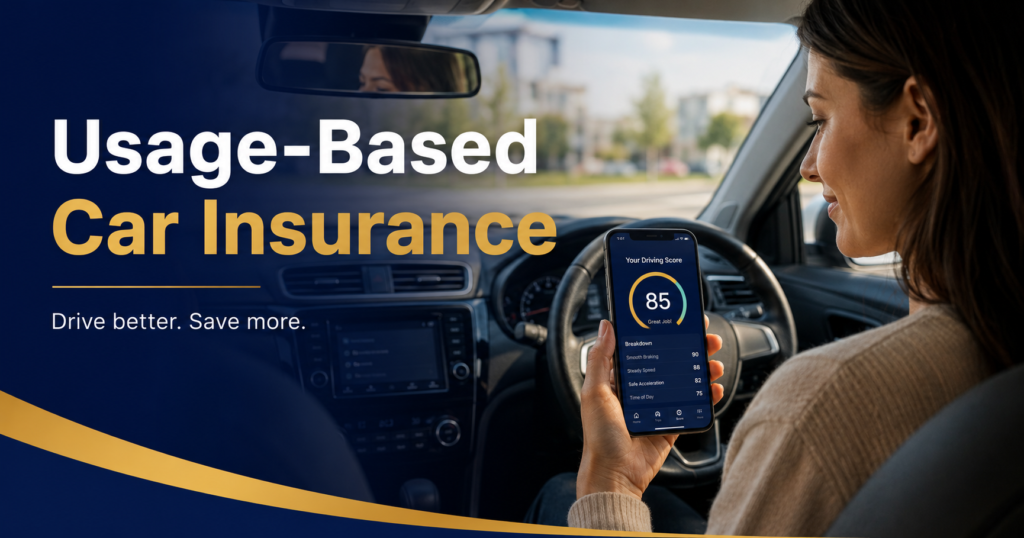
I was skeptical the first time my insurer offered a discount for letting an app watch how I drive. It felt like trading privacy for a maybe-discount, and I almost deleted the email without opening it. Then I actually ran the math on my driving, mostly daytime, no hard braking, short commute, and realized I was probably leaving real money on the table by not trying it.
Three months later, my premium dropped by a chunk I genuinely wasn’t expecting, more than covering my skepticism about being tracked. Here’s everything I actually learned about usage-based car insurance, what it tracks, what it saves, and where the real tradeoffs are, since most explanations either oversell the savings or overstate the privacy risk without much nuance.
I’ve already covered general auto insurance strategy in my best car insurance guide, the teen driver angle in my car insurance for teenage drivers guide, and the non-owner situation in my non-owner car insurance guide here on Insurance Pikr. This one is specifically about usage-based car insurance, what it actually means, and whether it’s genuinely worth it in 2026.
What Is Usage-Based Car Insurance, Exactly
Usage-based car insurance (UBI), also called telematics or pay-as-you-drive insurance, is a program where your premium is tied to your actual driving behavior and mileage rather than generic factors like your age, zip code, and vehicle type alone. An app on your phone or a small plug-in device tracks things like braking patterns, acceleration, speed, phone use while driving, and what time of day you’re on the road, then feeds that data back to your insurer to calculate a personalized rate.
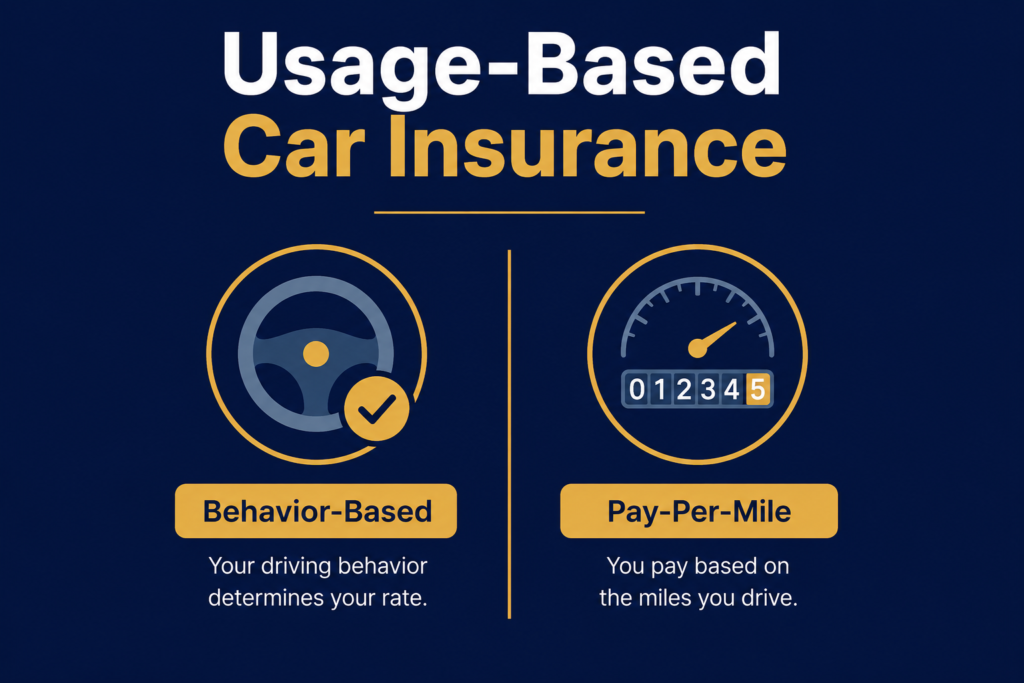
There are two distinct types worth understanding separately. Behavior-based telematics programs (like Progressive Snapshot or State Farm Drive Safe & Save) reward or penalize how you drive. Pay-per-mile programs (like Allstate Milewise or Nationwide SmartMiles) charge based purely on how much you drive, regardless of driving style, making them especially useful for people who work from home or have short commutes.
Does Usage-Based Car Insurance Actually Save Money?
Real savings vary more than the marketing suggests. According to a 2024 Consumer Reports survey of over 40,000 policyholders, the median annual savings from usage-based programs was $120, with younger drivers seeing the largest median savings at $245 a year. Low-mileage drivers using pay-per-mile programs specifically can save far more, Allstate Milewise advertises up to 50% off for drivers logging around 3,000 miles a year or less.
That same Consumer Reports survey found something worth knowing before you sign up: only 28% of policyholders even knew their insurer offered a telematics discount in the first place, and of those who tried it, 19% quit using it for various reasons, mostly around the tracking itself feeling invasive or the discount not being as large as expected.
Usage-Based Car Insurance Companies Worth Comparing
I looked at maximum discount, whether the program can raise your rate, and independent satisfaction data, similar to how I compared companies in my car insurance for teenage drivers guide, since age and driving behavior both feed into the same underlying pricing models. Yahoo Finance’s 2026 usage-based insurance rankings is a solid source for digging deeper into each program’s specific pros and cons:
| Company | Program Name | Max Discount | Type | Notable Detail |
|---|---|---|---|---|
| State Farm | Drive Safe & Save | Up to 30% | Behavior-based | Won’t raise rates for risky driving; available in most states |
| Progressive | Snapshot | Varies (avg. $169 sign-up savings) | Behavior-based | Can increase rates for risky driving |
| Allstate | Drivewise / Milewise | Up to 40% (Drivewise) / 50% (Milewise) | Both behavior and pay-per-mile | Milewise is a true pay-per-mile option |
| Nationwide | SmartRide / SmartMiles | Up to 40% | Both behavior and pay-per-mile | SmartRide ranked #1 in J.D. Power’s 2025 UBI satisfaction study |
| Farm Bureau | Driveology | Up to 50% | Behavior-based | Automatic 10% enrollment discount; won’t raise rates |
| The Hartford | TrueLane | Up to 40% | Behavior-based | Strong option for older, experienced drivers |
| Liberty Mutual | RightTrack | Varies | Behavior-based | Standard tracking period is just 90 days in most states |
(Discounts and availability vary by state. Some programs, including GEICO DriveEasy, Progressive Snapshot, and Travelers IntelliDrive, can increase your rate for genuinely risky driving behavior, while others like State Farm, Nationwide, and Farm Bureau guarantee they won’t.)
Why Usage-Based Car Insurance Isn’t Available in California
If you’re in California and wondering why you can’t find these programs, this is worth understanding directly rather than assuming it’s a gap in your specific insurer’s offerings. California’s Proposition 103, passed by voters in 1988 specifically to control how insurance rates are calculated, effectively bans traditional telematics-based usage-based insurance statewide, a restriction confirmed across multiple 2026 telematics rankings that specifically exclude California entirely. California lawmakers introduced Assembly Bill 1833, the Consumer Driving Data Protection Act, in 2026 specifically to let drivers voluntarily opt into telematics programs, but as of now, no major usage-based insurance program is available to California residents, regardless of which company you ask.
The Privacy Trade-Off Worth Understanding
This is the part I underestimated going in. Signing up means genuinely sharing detailed data about your location, driving times, speed, and habits with your insurer, and how that data is stored, used, or potentially shared with third parties varies by company and by state, since each state has its own data privacy laws governing this. There have been real lawsuits over how some insurers have used or shared telematics data in recent years, which is exactly why reading the specific privacy terms before enrolling matters more than most people realize when they sign up purely chasing a discount.
Is Usage-Based Car Insurance Actually Worth It for You?
The honest answer depends entirely on your driving profile. If you’re a low-mileage driver, someone who works from home, has a short commute, or drives an older second car occasionally, a pay-per-mile program can mean substantial, genuinely meaningful savings, ValuePenguin’s usage-based insurance analysis breaks this down further by exact mileage bands if you want to run your own numbers. If you’re a safe, average driver with a normal commute, a behavior-based program can still save you something, though the Consumer Reports median of $120 a year suggests tempering expectations rather than assuming the advertised “up to 40%” applies to everyone equally.
If you drive for work, freelance delivery, rideshare, or client visits, worth knowing upfront: personal usage-based programs typically exclude commercial use entirely, and using one while driving for pay can jeopardize a claim later. I’ve covered the commercial side of this in my business insurance for freelancers guide here on Insurance Pikr if that applies to you.
If you know you occasionally use your phone while driving, brake hard, or drive frequently late at night, it’s worth choosing a company that explicitly won’t raise your rate for risky driving, like State Farm, Nationwide, or Farm Bureau, rather than one that can penalize you, like Progressive Snapshot or GEICO DriveEasy.
Common Mistakes People Make With Usage-Based Car Insurance
- Assuming every program guarantees a discount with no downside. Some programs, including Progressive Snapshot and Travelers IntelliDrive, can actually raise your premium if your tracked driving data looks risky.
- Not checking state availability before assuming you qualify. California bans traditional telematics programs entirely, and several other states have specific restrictions or exclusions by program.
- Skipping the privacy policy entirely. Understanding exactly what’s tracked, how long it’s kept, and whether it can be shared with third parties matters more than most people realize before enrolling.
- Choosing a behavior-based program despite genuinely risky driving habits. If hard braking, phone use, or late-night driving are part of your normal routine, a pay-per-mile or no-penalty program is usually the safer choice.
- Assuming the “up to 40%” headline discount is typical. Real median savings tend to be far more modest, budget your expectations around actual survey data rather than the advertised maximum.
- Quitting a program too early to see real savings. Most telematics programs need 60-90 days of consistent, honest driving data before the discount fully reflects your actual habits.
Where This Leaves Me Now
That initial skepticism turned into one of the more genuinely useful discounts I’ve found on my policy, mostly because my actual driving habits happened to match what the program rewards. It’s not a universal win, and it’s not risk-free from a privacy standpoint, but for the right driving profile, usage-based car insurance is one of the few discounts that’s actually earned through behavior rather than just demographic luck.
If you’re on the fence the way I was, checking your specific state’s availability and your insurer’s exact terms takes less time than it feels like it will. If you’re also working through other coverage decisions, I’ve written about life insurance, home insurance, health insurance, and pet insurance here on Insurance Pikr too.
For state-specific program details and how insurers actually calculate telematics scores, Compare.com’s usage-based car insurance guide is a solid, current place to check specifics before enrolling in any single program.
I write about this kind of practical, real-world insurance stuff regularly over on Insurance Pikr, so if this helped you decide whether to try it yourself, there’s more where it came from.