

Does Health Insurance Cover Weight Loss Drugs? A 2026 Guide

Your doctor finally says the words you’ve been hoping to hear. A GLP-1 medicine like Wegovy or Zepbound might really help you. You leave the appointment feeling hopeful. Then the pharmacy calls. Your insurance denied it. Or it’s covered but the copay is more than your car payment.
That swing from hope to frustration is something a lot of people feel right now. So does health insurance cover weight loss drugs? Sometimes. It depends on your plan and your diagnosis and how the prescription is written. This guide explains how coverage works in 2026 and what to do when the answer is no.
The quick answer
Coverage for weight loss drugs is uneven. Many employer plans cover them only with prior approval and some exclude them completely. Medicare traditionally didn’t cover drugs used only for weight loss. But a new Medicare GLP-1 Bridge started July 1, 2026 with a $50 monthly copay for people who qualify. Medicaid coverage depends on your state. The same drug is often covered more easily when it’s prescribed for diabetes or heart risk.
Why the reason for the prescription matters
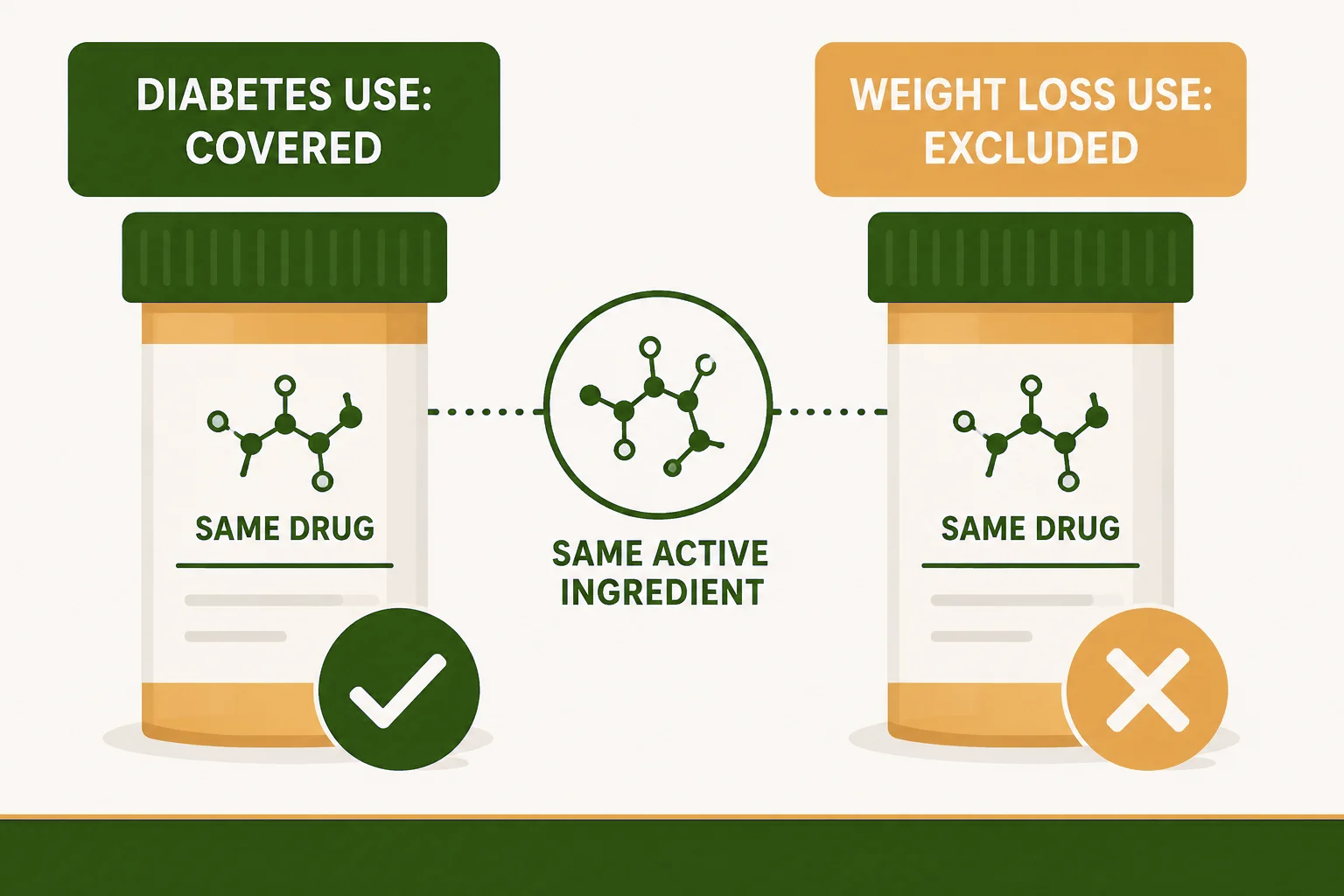
Here’s what confuses so many people. Some GLP-1 drugs are approved for more than one use. Ozempic and Mounjaro are approved for type 2 diabetes. Wegovy and Zepbound are approved for chronic weight management. Wegovy is also approved to lower the risk of heart attack and stroke in certain adults. Zepbound is also approved for some adults with obstructive sleep apnea.
Insurance often treats these uses very differently. A plan may cover a drug for diabetes and deny the same drug for weight loss alone.
Coverage by type of insurance
| Type of plan | How coverage usually works in 2026 |
|---|---|
| Employer plans | Varies by employer. Many require prior authorization and some exclude weight loss drugs |
| Marketplace plans | Varies by state and insurer. Check the plan’s drug list before you enroll |
| Medicare Part D | Covers these drugs for approved medical uses such as diabetes or heart risk. Weight loss use may qualify for the GLP-1 Bridge |
| Medicaid | Each state decides. Some cover them for obesity and some don’t |
The Medicare GLP-1 Bridge explained
This is the biggest change in 2026. Medicare launched a temporary program called the GLP-1 Bridge. It started July 1, 2026 and is set to run through December 31, 2027.
- Eligible people pay a flat $50 copay each month
- Covered drugs include Wegovy and the Zepbound KwikPen and the Foundayo pill
- You must be enrolled in a Medicare Part D plan
- You generally need a BMI of 35 or higher or a BMI of 27 or higher with a related condition such as heart disease or prediabetes
- Your prescriber must get prior authorization
There are a few catches. That $50 doesn’t count toward the Part D deductible or the $2,100 yearly out-of-pocket cap. And Extra Help can’t be applied to it. Rules may change so check Medicare.gov or call your plan for the latest details.
What prior authorization means
Prior authorization means your insurer must approve the drug before it will pay. Your doctor sends medical records that show you meet the plan’s rules. Those rules often include a certain BMI and a related health condition. Some plans also require proof that you tried diet and exercise programs first.
Approvals often last for a set time. Plans may later ask for proof that the drug is helping before they renew it.
How to check your coverage step by step
Step 1: Log in to your insurer’s website or app and search the drug list. It’s often called a formulary. Look up the exact drug name.
Step 2: Check whether it needs prior authorization or step therapy. Step therapy means trying cheaper options first.
Step 3: Call the number on your card and ask a simple question. Is this drug covered for my diagnosis and what will I pay each month?
Step 4: Ask your doctor’s office to submit the prior authorization. Make sure they include your full medical history.
Step 5: Write down the reference number and date of every call.
What to do if you get denied
A denial isn’t always the end. Honestly a lot of first denials happen because paperwork was missing.
Step 1: Read the denial letter closely. Find the exact reason.
Step 2: Ask your doctor to send a letter of medical necessity. That explains why the drug is right for you.
Step 3: File an internal appeal with your insurer by the deadline in the letter.
Step 4: If the appeal fails you may have the right to an external review by an independent reviewer. HealthCare.gov explains how appeals work.
If your plan simply excludes weight loss drugs an appeal may not change that. In that case ask your employer’s HR team whether the benefit might be added in the future.
Paying without insurance
If insurance won’t help there may still be options. Drug makers now sell some versions directly to patients at lower cash prices than the list price. Manufacturer savings cards can help people with commercial insurance. Ask your doctor and pharmacist about current programs.
Please be careful with very cheap online offers. The FDA has warned about fake and unapproved versions of these drugs. Only use a licensed pharmacy and a real prescription.
Picking a plan during open enrollment
If you’re shopping for coverage this fall, drug coverage should be part of the decision from the start. Open enrollment for 2027 Marketplace plans begins November 1, 2026 in most states. Employer plans usually have their own enrollment window in the fall too.
Before you choose, look up each plan’s drug list and search for the exact medicine your doctor mentioned. Check which tier it’s on. A higher tier usually means a higher copay. Then look for notes like PA for prior authorization or QL for quantity limits.
A plan with a slightly higher premium can still cost far less overall if it covers your medicine. Add up the premium plus the yearly drug cost before you decide.
Questions to ask your doctor’s office
- Which diagnosis codes will you list on the prescription
- Have you had success getting this drug approved with my insurer before
- What records will you send with the prior authorization
- Is there another approved drug my plan covers more easily
- How often will I need follow-up visits to keep the approval
Many offices handle these requests every week. They often know the quirks of local insurers better than anyone.
A hypothetical example
Picture a woman in her 50s with prediabetes and high blood pressure. Her employer plan denied Wegovy at first because a form was incomplete. Her doctor resubmitted with her blood test results and her heart risk history. The second request was approved for six months. She set a calendar reminder to get her follow-up visit done before it ran out.
This is only an illustration. But it shows how much details and timing can matter.
Common mistakes to avoid
- Assuming Medicare never covers these drugs
- Giving up after the first denial
- Not checking the drug list before choosing a plan during open enrollment
- Letting an approval expire without renewing it
- Buying from websites that sell drugs without a real prescription
- Forgetting that coupons may not work with government insurance
Does health insurance cover weight loss drugs: your questions answered
Will my insurance cover Ozempic for weight loss?
Many plans cover Ozempic only for type 2 diabetes. For weight loss alone plans usually look at Wegovy or Zepbound instead and may still require approval.
Does the Medicare $50 copay apply to everyone on Medicare?
No. You need Part D and you need to meet the medical criteria and get prior authorization.
Can I switch plans to get better coverage?
Usually only during open enrollment or after a qualifying life event. Check drug lists before you switch.
A calm way to finish
Getting these medicines covered can feel like a maze. But it’s a maze with a map. Check your drug list. Work closely with your doctor’s office. Appeal when it makes sense. And keep your health goals at the center of every choice.
If you’re comparing plans our guide to the best health insurance in the USA can help. And if you’re on Medicare our article on Medicare Advantage vs Original Medicare explains how drug coverage fits each option.
Disclaimer: This article is general information and not medical or insurance advice. Talk to your doctor about whether any medicine is right for you. Coverage rules change often so check with your plan before you decide.