
Best Pet Insurance Policy in the USA 2026: What I Learned After a $4,200 Vet Bill
My dog swallowed part of a tennis ball on a random Tuesday. By that evening I was sitting in an emergency vet waiting room doing math in my head I really didn’t want to be doing, because I already knew I didn’t have pet insurance.

Emergency surgery, an overnight stay, follow-up visits. The final bill came out to just over $4,200. I paid it on a credit card and spent the next few months paying that off too, on top of everything else. If you’ve ever been handed a vet bill that made your stomach drop, you already know exactly the feeling I’m talking about, and if you haven’t yet, I promise you it’s coming for every pet owner eventually.
Here’s the part I didn’t expect: getting a policy afterward taught me more about how pet insurance actually works than any comparison site did beforehand, mistakes included. And some of what I learned genuinely surprised me, especially the part about which conditions never get covered no matter which company you pick, so stick with me through this one.
This isn’t a “what is pet insurance” article. This is what I actually learned comparing providers, filing real claims, and figuring out what matters versus what’s just marketing. I’m writing this here on Insurance Pikr because this is exactly the kind of practical, no-fluff guide I wish I’d read before that tennis ball incident.
Why Pet Insurance Actually Matters More Than People Think
Vet costs have climbed noticeably in the last couple of years, treatment for a serious accident or illness can easily run into the thousands, and specialty procedures like cancer treatment or orthopedic surgery can go well beyond that.
For dogs, accident-and-illness policies average around $62 a month, while accident-only coverage runs closer to $16 a month, making accident-only the closest thing to genuinely cheap pet insurance if budget is tight. For cats, accident-and-illness plans average around $32 a month, with accident-only coverage closer to $9. Your actual quote will vary a lot based on your pet’s age, breed, and where you live, vet costs in a big city are simply higher than in a rural area. If you’re specifically hunting for the best pet insurance for dogs versus the best pet insurance for cats, know upfront that cat premiums run roughly 40-50% lower across almost every provider, simply because cats statistically file fewer high-cost claims.
The math that convinced me: one serious emergency can cost more than 5-10 years of monthly premiums combined. That’s the entire point of insurance, you’re not betting you’ll need it, you’re protecting against the one time you really do.
Accident-Only vs. Accident-and-Illness vs. Wellness Add-Ons
This is the part that confused me most when I first started comparing plans.
- Accident-only: Covers injuries like broken bones, swallowed objects, or car accidents. Cheapest option, but doesn’t cover illnesses like cancer, infections, or diabetes.
- Accident-and-illness: The most common type of plan. Covers both injuries and illnesses, including chronic conditions like diabetes or ongoing treatments.
- Wellness add-ons: Optional extra coverage for routine costs like vaccinations, annual checkups, and flea/tick prevention. Usually adds $10-$20 a month and isn’t included in standard accident-and-illness plans.
I went with accident-and-illness without wellness, since I’d rather budget routine costs myself and use insurance specifically for the expensive, unpredictable stuff.
For a deeper breakdown of exactly what’s typically covered and excluded, U.S. News’ pet insurance guide is a solid, unbiased place to double-check details for your specific pet’s situation.
Companies I Actually Compared
I looked at pricing, claims speed, and what real owners said about the claims experience, not just the marketing page:
| Company | Best For | Avg. Monthly Rate (Dog) | Reimbursement | Standout Feature |
|---|---|---|---|---|
| Lemonade | Affordability & speed | $25-35 | 70-90% | Fully digital claims, bundling discounts with home/car insurance |
| Trupanion | Unlimited coverage | $60-80 | 90% flat | Direct vet pay at participating clinics |
| Spot | Flexible limits | $35-50 | 70-90% | 7 annual coverage limit options, strong customer reviews |
| Pumpkin | Short waiting periods | $40-55 | 90% (up to 100% for wellness) | Only 14-day wait for conditions like hip dysplasia |
| Embrace | Military discounts | $30-45 | 70-90% | Up to 25% off through USAA partnership |
| Figo | High reimbursement | $35-50 | Up to 100% | No annual payout limits, zero-copay option |
(Rates are national averages and vary significantly by breed, age, and location. Cat premiums typically run 40-50% lower than dog premiums.)
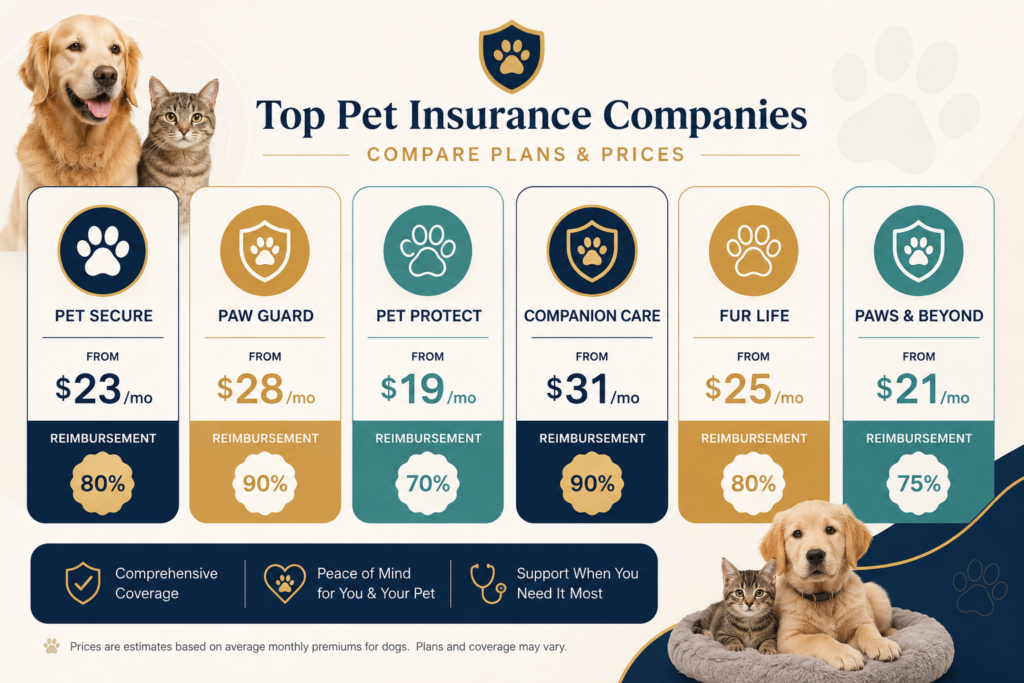
No single company wins every category here either, similar to what I found comparing car insurance companies earlier this year. It really comes down to whether you value low cost, high reimbursement, or fast claims handling most.
Step-by-Step: How I Actually Chose a Policy
1. Enroll while your pet is young and healthy. Pre-existing conditions are almost never covered, and premiums are lowest when your pet is young. I waited until after an incident, don’t make that mistake, get coverage the same week you bring a new pet home if you can.
2. Check the waiting periods before you buy. Most illnesses have a 14-day waiting period, but some conditions (like cruciate ligament injuries) can have waits of six months or longer depending on the provider. A handful of insurers advertise pet insurance with no waiting period for accidents specifically (though illness waiting periods still apply almost everywhere), which matters if you’re enrolling a pet that’s already active and accident-prone. Know this upfront so you’re not caught off guard during an emergency.
3. Compare real quotes for your specific pet, not generic averages. Pet Insurance Review’s comparison tool pulls real-time quotes from over two dozen providers based on your pet’s actual breed, age, and location, which matters a lot since averages can be misleading for higher-risk breeds.
4. Decide on your reimbursement rate and deductible together. A 90% reimbursement with a low deductible costs more monthly but pays out more when you actually file a claim. I picked 80% reimbursement with a $250 deductible as a middle ground that kept my premium reasonable.
5. Ask about multi-pet or bundling discounts. If you also have home insurance or car insurance with the same company, some insurers like Lemonade offer a bundling discount on top of a multi-pet discount if you’re covering more than one animal.
6. Read the bilateral condition clause carefully. If your pet develops an issue on one side of the body (like a knee or hip) before enrollment, many insurers exclude the same condition on the other side too, treating it as a single pre-existing issue. This tripped up a friend of mine who assumed only the diagnosed leg was excluded.
What to Confirm Before You Enroll
Before you actually sign up, it’s worth pulling all of this together into one pass rather than discovering gaps after an emergency. Confirm you’re enrolling while your pet is young and healthy, or as soon as possible if that window has already passed. Check the exact waiting periods for illnesses and any specific conditions common to your pet’s breed. Get real quotes based on your pet’s actual breed, age, and location rather than relying on generic averages, since those can be misleading for higher-risk breeds. Decide on your reimbursement rate and deductible as a pair, not separately, since they directly affect each other’s value. Ask specifically about multi-pet or bundling discounts if you have more than one animal or other policies with the same insurer. And read the exclusions section closely, especially anything related to bilateral or pre-existing conditions, since that’s where most claim denials actually come from.

Common Mistakes I’d Tell Anyone to Avoid
- Waiting until after a health scare to buy coverage. This is exactly what happened to me, and it meant my next incident was covered but the one that actually motivated me to shop wasn’t.
- Assuming all pre-existing conditions are permanently excluded. Some curable conditions (like a past ear infection) can become eligible again after a symptom-free period, usually around six months, worth asking about directly.
- Picking the cheapest plan without checking the annual payout limit. A low premium with a $2,500 annual cap can leave you seriously exposed if your pet needs an expensive surgery.
- Not budgeting for routine care separately. Standard plans don’t cover checkups, vaccines, or dental cleanings unless you add a wellness plan, budget for those out of pocket if you skip the add-on.
- Switching providers without understanding the reset. A new insurer won’t cover anything related to a condition your previous insurer already knew about, even if it would have been covered under your old policy.
Where This Leaves Me Now
It’s been three years since that tennis ball incident, and I still think about that $4,200 bill more than I’d like to. But having a policy in place since then has genuinely changed how I handle vet visits, I don’t hesitate before recommended tests or treatment anymore, because I know most of the cost is covered.
If you’re a pet owner who’s been putting this off, the same way I did for years, that’s usually the moment right before something expensive happens. If you’re also working through other coverage decisions, I’ve written about my own experience with life insurance, health insurance, home insurance, and business insurance here on Insurance Pikr too.
For real owner reviews and claims data across dozens of providers, CNBC Select’s pet insurance rankings and Forbes Advisor’s pet insurance methodology are both solid places to cross-check before deciding.
I write about this kind of practical, real-world insurance stuff regularly over on Insurance Pikr, so if this helped, there’s more where it came from.