

Renters Insurance vs Homeowners Insurance: What Each One Really Covers
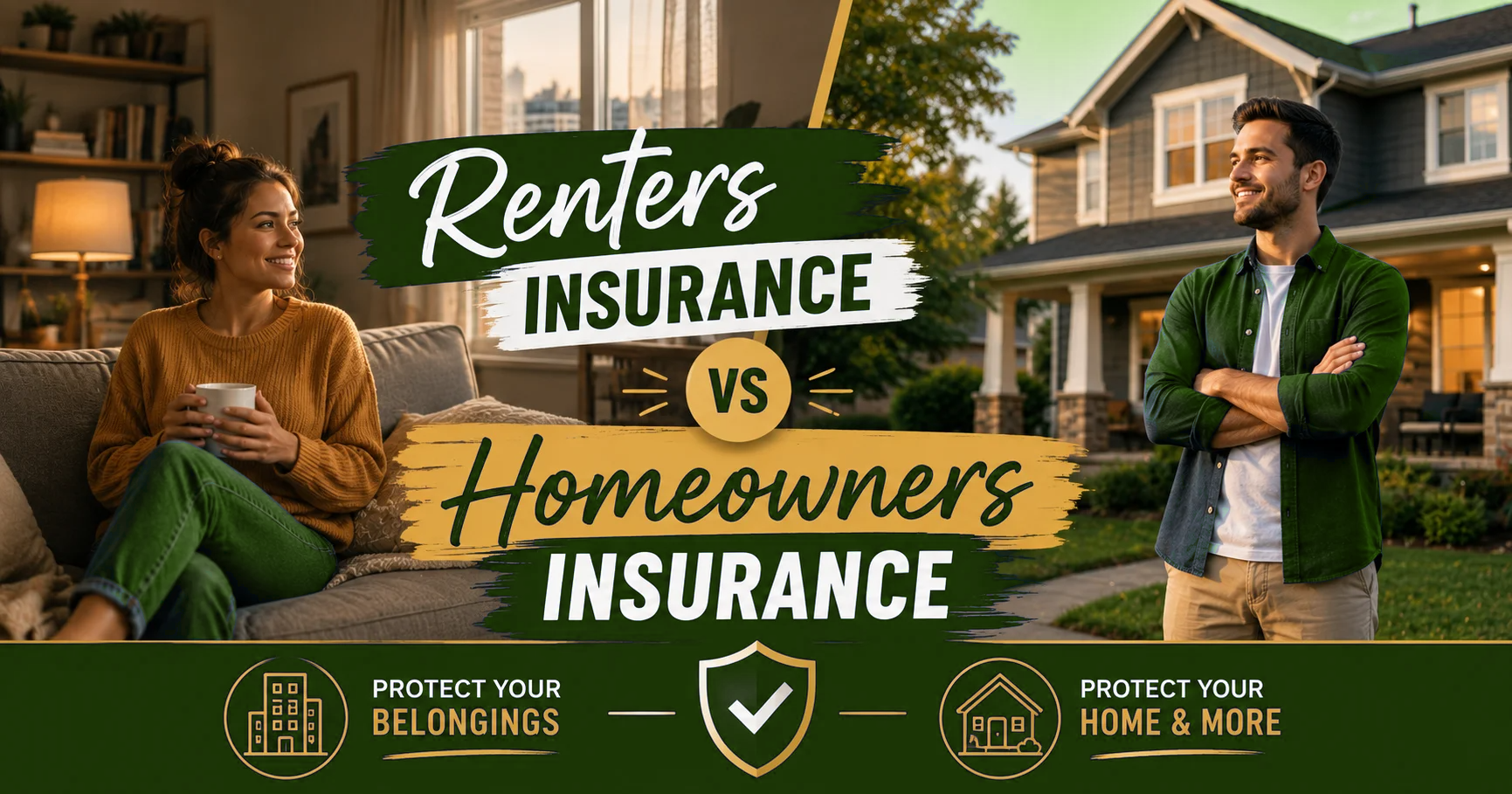
A lot of people assume the landlord’s insurance covers their stuff. It doesn’t. And a lot of new homeowners assume their old renters policy will keep working. It won’t. These two policies sound similar but they protect very different things.
Here’s the plain-language version of how they compare and how to choose.
The short answer
Renters insurance protects what’s inside your home and your liability. Homeowners insurance protects the building and what’s inside it and your liability. The big difference is the structure. If you rent the landlord is responsible for insuring the building. If you own that job is yours.
What renters insurance covers
A standard renters policy has a few main parts.
Personal property. This covers your belongings such as furniture and clothing and electronics if they’re damaged or stolen in a covered event. Covered events usually include fire and theft and certain types of water damage. Flood and earthquake typically aren’t included.
Liability. If someone is injured in your rental or you accidentally damage someone else’s property then liability coverage can help with legal costs and medical bills up to your limit.
Loss of use. If a covered event makes your rental unlivable then this part helps pay for temporary living costs such as a hotel or extra food expenses.
Many renters policies also cover your belongings away from home such as items stolen from your car or a laptop taken from a coffee shop. Check your policy for the exact terms.
What homeowners insurance covers
A standard homeowners policy often called an HO-3 includes several parts.
- Dwelling coverage for the physical structure of the house
- Other structures coverage for things like a garage or fence or shed
- Personal property coverage for your belongings
- Liability coverage if someone is hurt on your property
- Loss of use coverage for temporary living costs
The first two items are what renters don’t have. That’s the main reason homeowners policies cost more.
What neither one covers by default
Both types of policy have limits. Neither usually covers floods or earthquakes. Both can have limits on high-value items such as jewelry and art and collectibles. Many exclude damage from neglect and wear and tear. Sewer or drain backup often needs a separate add-on.
If you live in a flood-prone area look at the FloodSmart website to learn about flood insurance. It’s a separate policy and usually has a waiting period before it takes effect.
A quick note on condos
If you own a condo you probably need something called an HO-6 policy. It covers the inside of your unit and your belongings and liability while the condo association’s master policy covers the building and common areas. The line between what you cover and what the association covers depends on your condo documents. Read them or ask your association.
Why your landlord’s policy isn’t enough
Your landlord’s insurance covers the building and the landlord’s liability. It does not cover your belongings. If a fire destroys your apartment the landlord’s insurer pays to rebuild the building. You’d be on your own for your furniture and clothes and electronics.
It also doesn’t protect you from liability in the way renters insurance does. If a guest trips on your rug and gets hurt a renters policy is what responds.
Some landlords require tenants to carry renters insurance as part of the lease. Even if yours doesn’t it’s worth having.
Replacement cost or actual cash value
This choice applies to both kinds of policy. Replacement cost pays to replace items at today’s prices. Actual cash value pays what the items were worth after depreciation. A five-year-old television might have a low cash value but cost a lot to replace.
Replacement cost coverage usually costs a bit more but gives better protection. Ask your agent which one your quote assumes.
Deciding how much personal property coverage you need
Here’s a simple way to estimate. Walk through your home room by room. Count the major items and think about what it would cost to replace each one. Include clothes and kitchen items and bedding and electronics and books. Many people are surprised by the total.
Take photos or a video of everything and keep it in the cloud. This home inventory makes claims much easier. The Insurance Information Institute has free tools and guidance on building one.
How to read your declarations page
Every policy comes with a declarations page. It’s usually one or two pages near the front and it lists the key numbers. Take five minutes to look at yours.
Find the personal property limit and the liability limit. Find the deductible. Check whether the policy says replacement cost or actual cash value. Look for any special limits on items such as jewelry or electronics. If you see something you don’t understand call your agent and ask for a plain explanation.
Picture someone who has a laptop and a bike and some nice headphones in their apartment. If a break-in happens they’ll want to know whether those items are covered at home and away and what their deductible is. Knowing that ahead of time beats finding out afterward.
Small adjustments that make a policy better
Policies aren’t one-size-fits-all. A few add-ons are worth a look.
Scheduled personal property coverage lists valuable items individually with their own limits. Water backup coverage can help if a drain or sewer backs up. Identity theft or equipment breakdown add-ons exist at some insurers. Each one adds cost so choose the ones that match what you own.
Roommates and guests
A renters policy usually covers you and relatives who live in your household. It doesn’t automatically cover a roommate who isn’t related to you. Each roommate generally needs their own policy or a named spot on yours if the insurer allows it. Ask before you assume.
Cost comparison without the guesswork
Renters insurance is usually much cheaper than homeowners insurance. That’s because it doesn’t cover a building. Homeowners premiums depend on the rebuilding cost and the home’s age and location and roof and claims history. You can see how those factors play out in our guide on how roof age affects your home insurance.
Exact prices vary by state and company and your own situation. Get quotes rather than relying on averages.
Which one do you need
- You rent a house or apartment and own belongings you’d need to replace: renters insurance
- You own a house: homeowners insurance
- You own a condo: an HO-6 policy
- You own a home and rent it out to others: a landlord policy instead of a standard homeowners policy
- You’re renting out a room in your own home: tell your insurer because that can change your coverage
When you’re unsure ask an agent to look at your exact situation. Don’t guess on this one.
When you move from renting to owning
If you’re buying your first home then your renters policy will end and a homeowners policy will take over. The transition catches some people off guard. Lenders require homeowners coverage before closing. Start getting quotes while your offer is under contract. We have a full timeline in our guide to home insurance for first-time homebuyers.
Mistakes people make
- Assuming the landlord’s policy covers their stuff
- Skipping renters insurance because it feels optional
- Choosing a limit that’s too low for the things they own
- Forgetting to update coverage after a big purchase
- Not asking about replacement cost
- Keeping a renters policy after buying a home
Renters insurance vs homeowners insurance: the bottom line
If you’ve ever put off buying renters insurance because it felt like one more bill then it helps to think of it as a small monthly price for peace of mind.
Renters and homeowners policies share the same basic idea but they protect different things. If you rent protect your belongings and your liability. If you own protect the building too. Either way it’s worth getting quotes and reading the policy before you need it.
For help comparing options see our guide to the best home insurance policy and check your state’s rules with the National Association of Insurance Commissioners.
Disclaimer: This article is for general information only. It is not financial or legal or insurance advice. Coverage and rules vary by state and by insurer. Please talk to a licensed insurance professional before you make a decision.