

Pet Insurance for Cats: 5 Easy Steps to Pick a Plan
Cats are masters at hiding pain. One day your cat skips breakfast. The next day she’s hiding under the bed. By the time you’re sitting in the emergency vet’s waiting room the estimate on the clipboard has a number you didn’t expect to see for a ten-pound animal.
That moment is exactly why people look into pet insurance for cats. And yet very few cat owners actually have it. This guide explains what cat insurance costs and what it covers and when it’s worth the money. It also covers when saving on your own might be smarter.
The quick answer
Pet insurance for cats averaged about $435 a year for accident and illness coverage in the US in 2025 according to NAPHIA. That’s a little over $36 a month. It’s often worth it if a surprise vet bill of a few thousand dollars would hurt your budget. It matters most if you insure your cat while she’s young and healthy.
Why so few cats are insured
Here’s a surprising stat. More than 95% of US cats and dogs have no pet insurance at all. For cats it’s even lower. Only about 2% are insured compared with about 6% of dogs based on industry data reported by dvm360.
Honestly I think part of it is the indoor cat myth. People assume an indoor cat won’t get hurt or sick. But many of the most common cat claims have nothing to do with going outside.
What cats actually get treated for
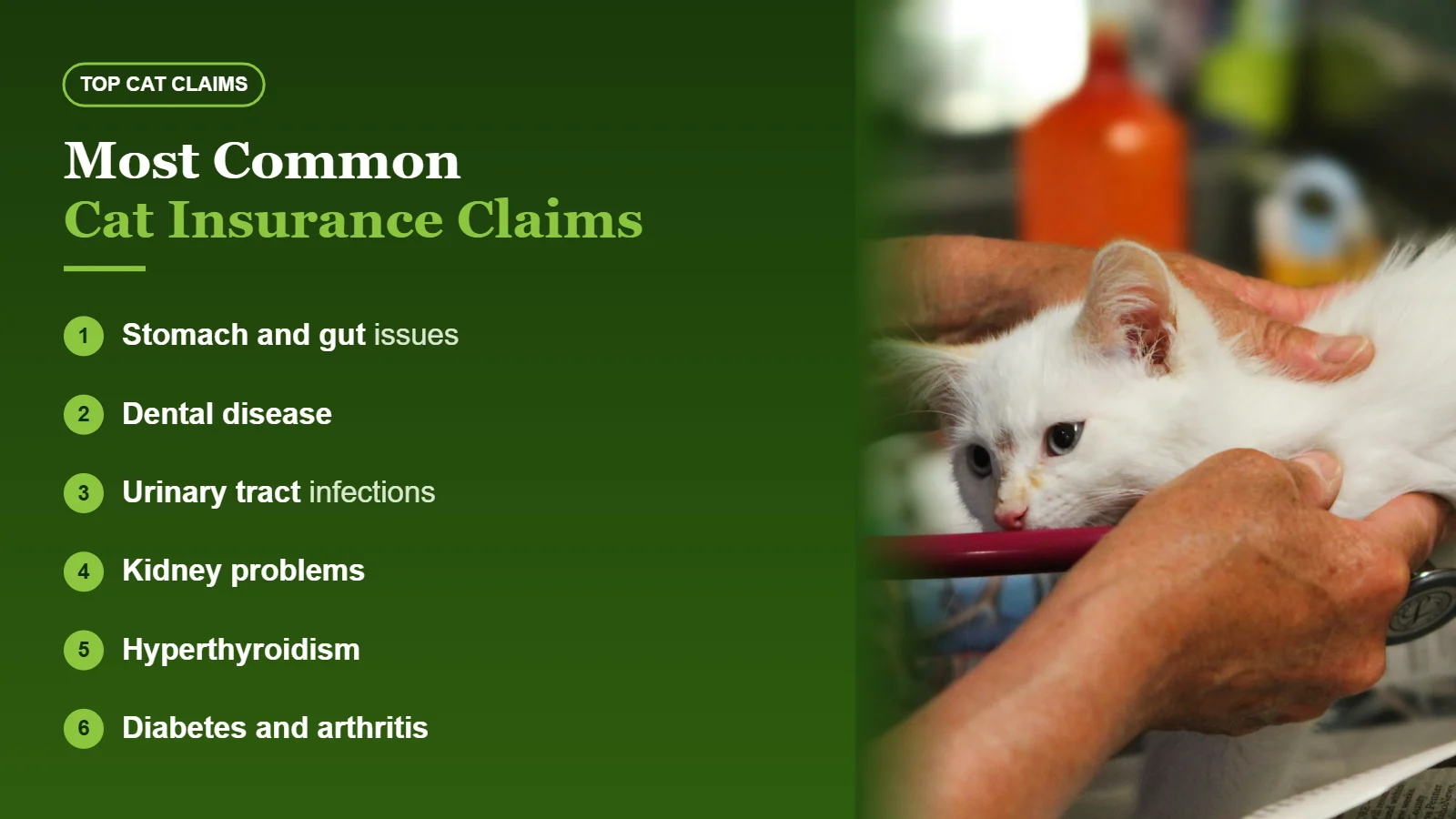
The North American Pet Health Insurance Association lists the most common cat claims. Gastrointestinal issues lead the list. Then come dental disease and urinary tract infections. Behavioral problems and respiratory issues and kidney disease follow. Hyperthyroidism and diabetes and arthritis show up too especially in older cats.
Urinary blockages in male cats deserve a special mention. They can turn into an emergency within hours and often need hospital care. And the largest single cat claim NAPHIA reported for 2025 was about $51,600 for cancer treatment.
What cat insurance costs
Average US premiums in 2025 from NAPHIA look like this.
| Plan type | Cats | Dogs |
|---|---|---|
| Accident and illness | $435 a year | $836 a year |
| Accident only | $112 a year | $190 a year |
Cats cost a lot less to insure than dogs. Your price depends on your cat’s age and breed and your ZIP code. It also depends on the deductible and reimbursement rate you choose. Premiums have been rising too. Accident and illness prices for cats went up about 12.6% in 2025.
Accident only or accident and illness
Accident only covers injuries such as a fall or a swallowed hair tie or a broken leg. It’s cheap. But it won’t pay for illnesses like kidney disease or urinary infections.
Accident and illness covers both. Since most cat claims are illnesses this is the plan most owners end up wanting. Some insurers also sell wellness add-ons for vaccines and checkups. Those are budgeting tools more than insurance so do the math before adding one.
The three numbers that shape your policy
Deductible. The amount you pay before the insurer starts paying. A higher deductible means a lower premium.
Reimbursement rate. The share of the bill the insurer pays after the deductible. Common choices are 70% or 80% or 90%.
Annual limit. The most the policy pays in a year. Some plans offer unlimited coverage. For a cat with a chronic illness a higher limit can matter a lot.
When pet insurance for cats is worth it
- You couldn’t pay a $3,000 vet bill without stress or debt
- Your cat is young and has no health problems on record yet
- You have a breed known for certain conditions
- You’d want to say yes to treatment without thinking about money first
When saving on your own might be better
If you already have a solid emergency fund you could self-insure. Put the monthly premium into a separate savings account and let it grow. That works well for some people. The risk is a big bill in the first year before the fund has built up.
Insurance may also offer less value for an older cat with existing conditions. Pre-existing conditions are usually excluded. That’s why timing matters so much.
5 easy steps to pick the best pet insurance for cats
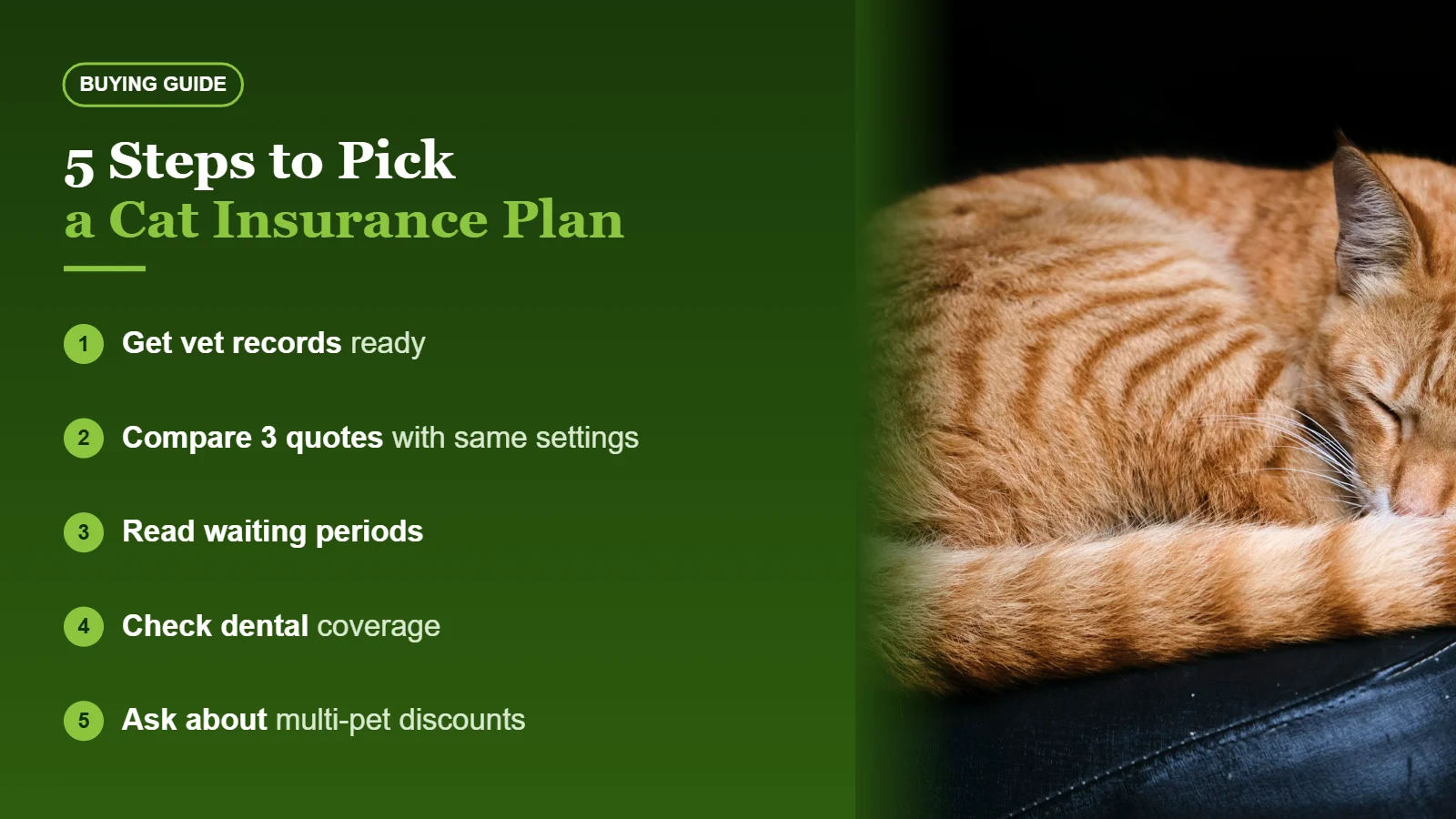
Step 1: Get your cat’s vet records ready. Insurers often review records from the past year. Knowing what’s on file helps you spot possible exclusions.
Step 2: Compare at least three quotes with the same settings. Use the same deductible and reimbursement and limit so the prices are truly comparable.
Step 3: Read the waiting periods. Most plans don’t cover illnesses for a short time after you sign up. Our guide on pet insurance waiting periods explains how they work.
Step 4: Check dental coverage. Dental disease is one of the most common cat claims. Some plans cover dental illness and others only cover dental injuries.
Step 5: Ask about multi-pet and workplace discounts. Many insurers discount a second pet. Our guide to multi-pet insurance discounts covers this. Some employers also offer pet insurance as a perk which we explain in employer pet insurance.
How a claim usually works
Most pet insurance works by reimbursement. You pay the vet first. Then you send the invoice and the vet notes to the insurer through an app or email. If the visit is covered the insurer pays you back after the deductible and at your reimbursement rate.
That means you still need some cash or credit available on the day of an emergency. A few insurers can pay some vets directly so ask about that if upfront costs worry you. And keep every invoice. Missing paperwork is one of the most common reasons claims get delayed.
A hypothetical example
Picture a three-year-old indoor male cat who keeps going to the litter box and nothing comes out. The owner rushes him to an emergency clinic. It’s a urinary blockage. He needs a catheter and a couple of nights in the hospital.
Without insurance the owner pays the whole bill. With an accident and illness plan that has a $250 deductible and 80% reimbursement the owner pays the deductible plus 20% of the rest. On a bill of a few thousand dollars that difference is real money. The exact numbers will vary by clinic and policy. But it shows why illness coverage matters more for cats than accident coverage.
Signs your cat needs a vet soon
Insurance helps with the bill. But catching problems early helps your cat even more. Call your vet quickly if you notice any of these.
- Straining in the litter box or crying while trying to pee
- Not eating for more than a day
- Repeated vomiting or diarrhea
- Hiding much more than usual
- Drinking a lot more water than normal
- Bad breath along with drooling or trouble chewing
A straining male cat is an emergency. Don’t wait until morning. Many of the other signs can point to the common illnesses insurers see every day such as kidney problems or dental disease or an overactive thyroid.
Common mistakes
- Waiting until the cat is older or already sick
- Buying accident only and expecting illness coverage
- Choosing a low annual limit to save a few dollars
- Skipping the fine print on dental and hereditary conditions
- Thinking an indoor cat can’t get seriously ill
Frequently asked questions
How much is pet insurance for a cat per month
Accident and illness coverage averaged about $435 a year in 2025 which is roughly $36 a month. Accident only averaged about $112 a year.
Do indoor cats need pet insurance
Indoor cats still get stomach problems and urinary issues and dental disease and kidney disease. Being indoors lowers some risks but not those.
Is cat insurance cheaper than dog insurance
Yes on average. In 2025 accident and illness coverage for cats cost about half of what dog owners paid. Cats are smaller and their typical treatments cost less. Big dog breeds also tend to have more joint problems that push prices up.
Does pet insurance cover spaying or vaccines
Standard plans usually don’t. Routine care like vaccines and spaying is often covered only by an optional wellness add-on.
Can I insure an older cat
Many insurers accept older cats but prices are higher and existing conditions are excluded. Our guide on pet insurance for senior pets explains what to expect.
Final thoughts
Your cat won’t tell you when something’s wrong. Insurance won’t change that. But it can change the conversation at the vet from what can I afford to what does she need. For a young healthy cat that peace of mind usually costs less than a coffee a week.
To compare companies see our guide to the best pet insurance policy in the USA.
Disclaimer: This article is general information and not veterinary or insurance advice. Prices and coverage vary by insurer and state and pet. Read the policy and talk to your vet or a licensed agent before you buy.